SHOWCASE

/ ARTIST / 2026

ARTIST: Moros
COUNTRY: Thailand
CONTACT: https://www.saatchiart.com/account/profile/2879639?q=1773945100
https://www.facebook.com/miu.thanaphat?
https://www.instagram.com/moros_thanphat?igsh=MWlzMzN1eXp0eW5kcQ%3D%3D&utm_source=qr
miyuu.artwork@gmail.com
my name is Thanphat Pitithawesupawat (MOROS), a Thai emerging artist currently studying at the Faculty of Painting, Sculpture and Graphic Arts, Silpakorn University.

My practice explores the relationship between identity and contemporary society, examining how individuals are shaped by shifting social values, cultural expectations, and the desire for belonging. I am particularly interested in how everyday objects and domestic environments can embody emotional and psychological traces, becoming reflections of the people who inhabit them.

Drawing inspiration from mid-century furniture and design, I reinterpret familiar forms to create works that exist between functionality and symbolism. By transforming ordinary objects into ambiguous forms, I explore the tension between comfort and discomfort, object and body, familiarity and estrangement. Through these subtle shifts, I invite viewers to reconsider how identity and meaning are constructed through perception and everyday experience.

Ultimately, I aim to create works that are visually accessible yet conceptually layered—pieces that can extend beyond the gallery and become part of daily life while continuing to encourage reflection on identity, society, and the complexities of the human experience.

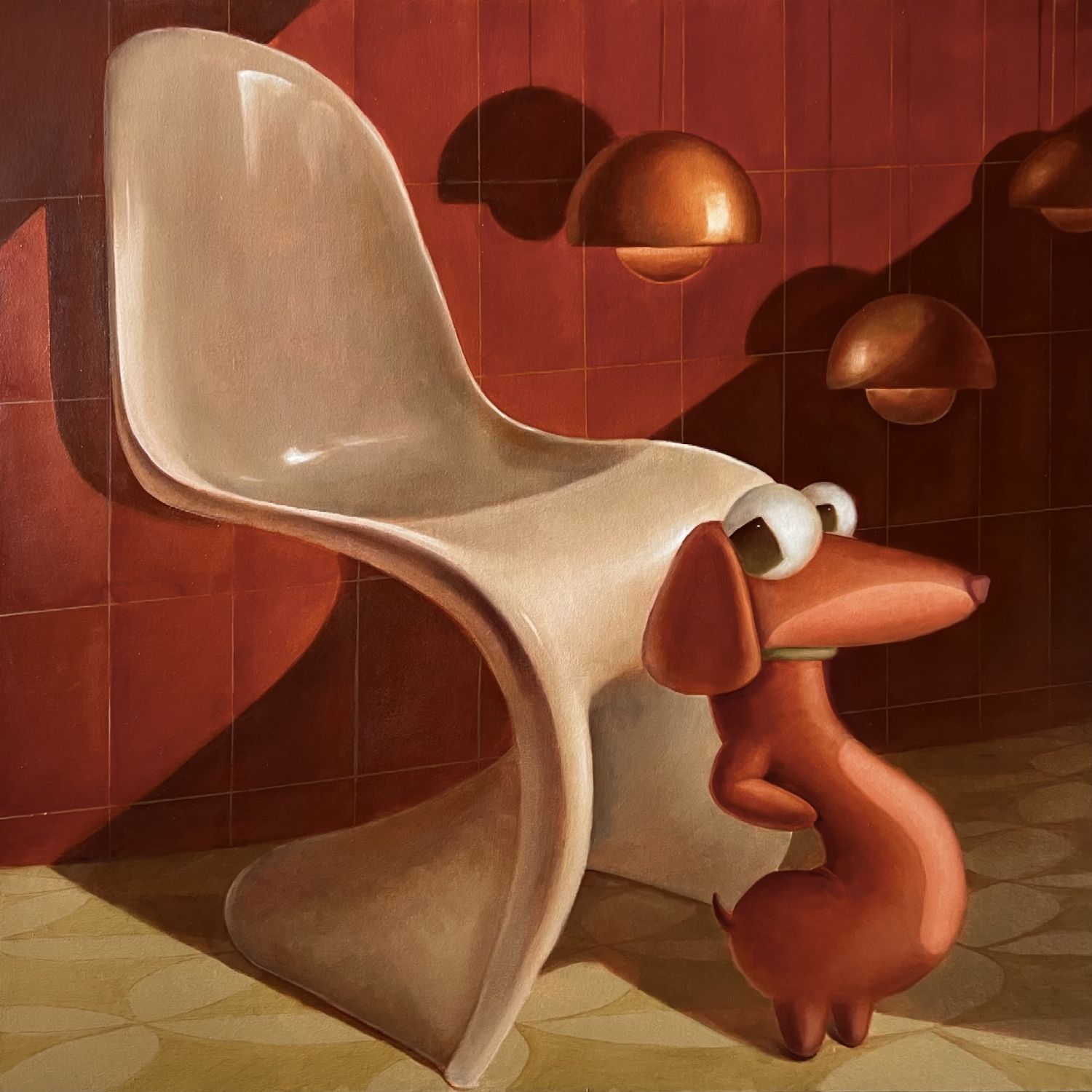
Keep your shape

oil on canvas
90 x 90cm
This work explores the relationship between “fluidity” and “stability” through the form of the Panton Chair and a dog figure, both designed with continuous flowing curves in the same direction.

The chair’s undulating form reflects the fast-paced, ever-changing nature of contemporary times, much like the constant flow of social trends and shifting beliefs. Yet, despite its fluid appearance, the structure remains firmly grounded, becoming a symbol of persistence and stability.

The dog serves as a representation of the human condition—navigating a world in constant motion—while raising the question of how one can preserve a sense of identity while moving with the flow.

Ultimately, stability may not lie in stillness, but in the ability to remain standing amidst continuous change.
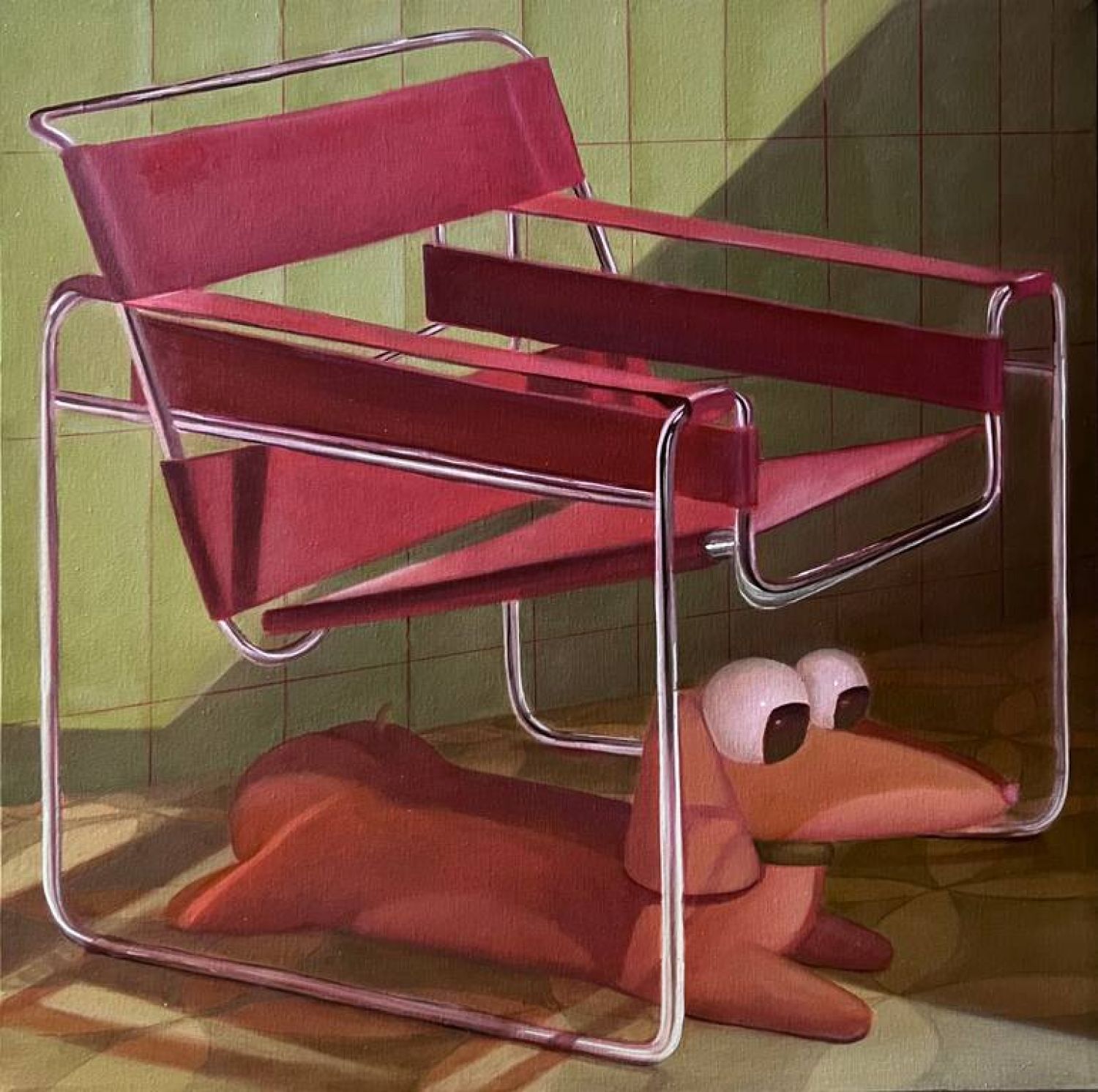
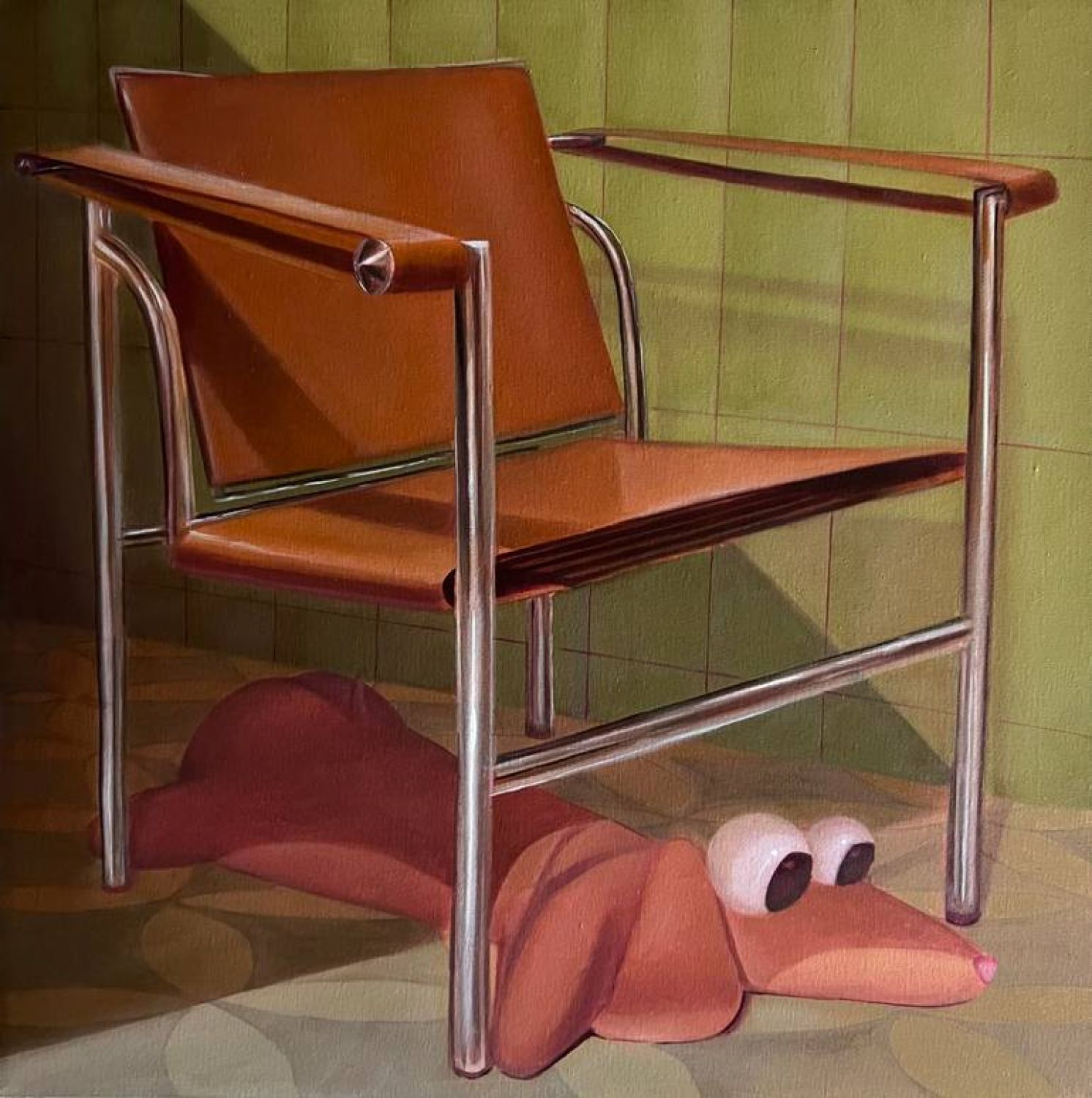
GENTLE UNDER PRESSURE

oil on canvas
60 x 60 cm
This body of work explores the relationship between tension and comfort through iconic chair structures such as the LC1 and the Wassily Chair—designs that rely on tightly stretched leather to create a surface that supports and relaxes the human body.

This paradox highlights a deeper idea: that the conditions which generate comfort may arise from forces that appear to be in complete opposition. The concept is further emphasized through the symbolic presence of a dachshund, resting innocently and at ease beneath the shadow of pressure.

Ultimately, the series suggests that the softest states can emerge from the most rigid structures, and that true relaxation may be a beautiful outcome shaped by the extremity of tension itself.

GENTLE UNDER PRESSURE

oil on canvas
60 x 60 cm
This body of work explores the relationship between tension and comfort through iconic chair structures such as the LC1 and the Wassily Chair—designs that rely on tightly stretched leather to create a surface that supports and relaxes the human body.

This paradox highlights a deeper idea: that the conditions which generate comfort may arise from forces that appear to be in complete opposition. The concept is further emphasized through the symbolic presence of a dachshund, resting innocently and at ease beneath the shadow of pressure.

Ultimately, the series suggests that the softest states can emerge from the most rigid structures, and that true relaxation may be a beautiful outcome shaped by the extremity of tension itself.

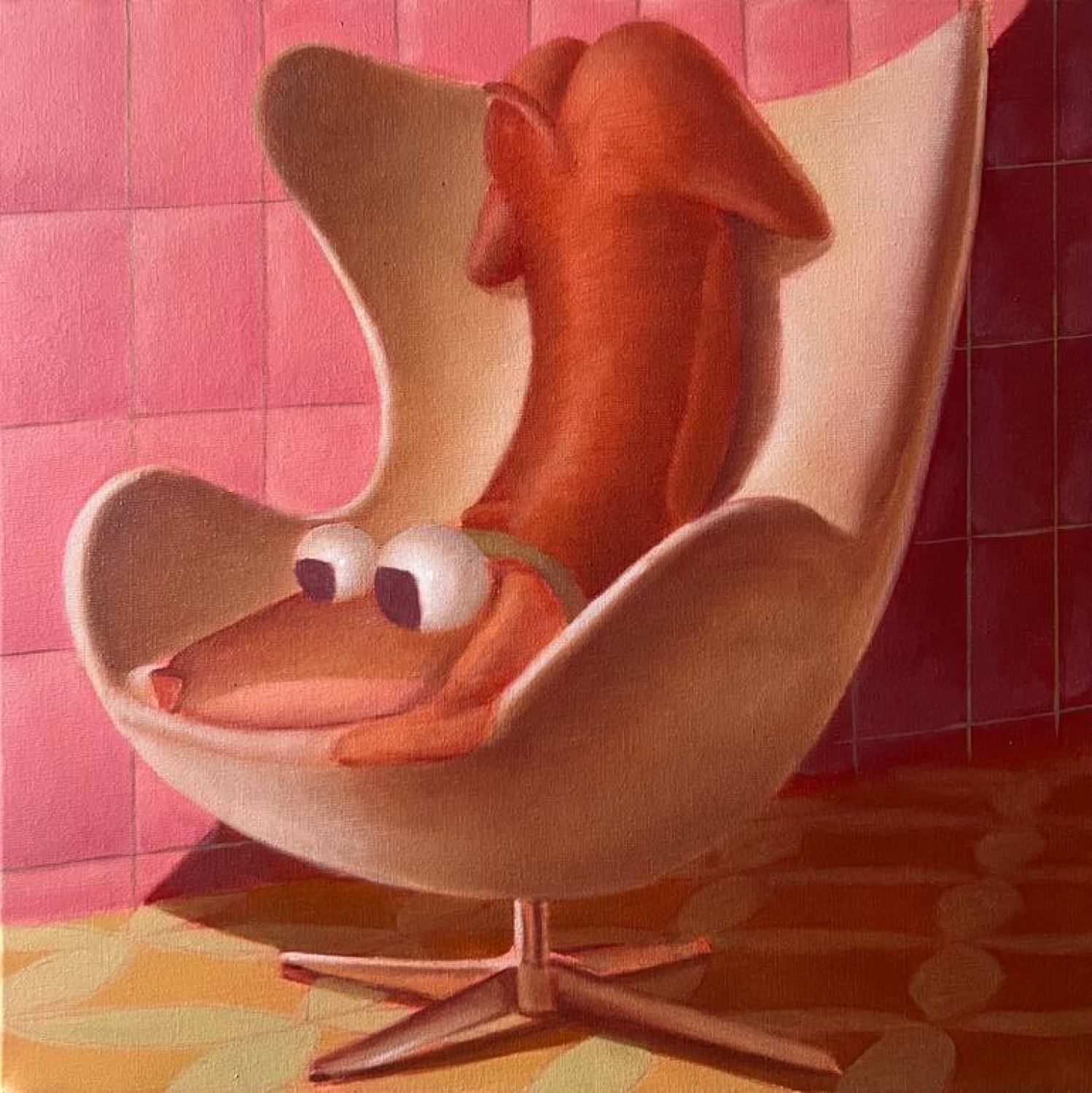
Safe your Shape

oil on canvas
40 x 40 cm
When the vision of a world-class furniture designer transcends mere aesthetics, it becomes a miniature piece of architecture engineered to "release" and "embrace" all weariness. In this space, the dachshund serves as a metaphor for humanity in its most defenseless state—surrendering entirely to absolute comfort and pure trust.

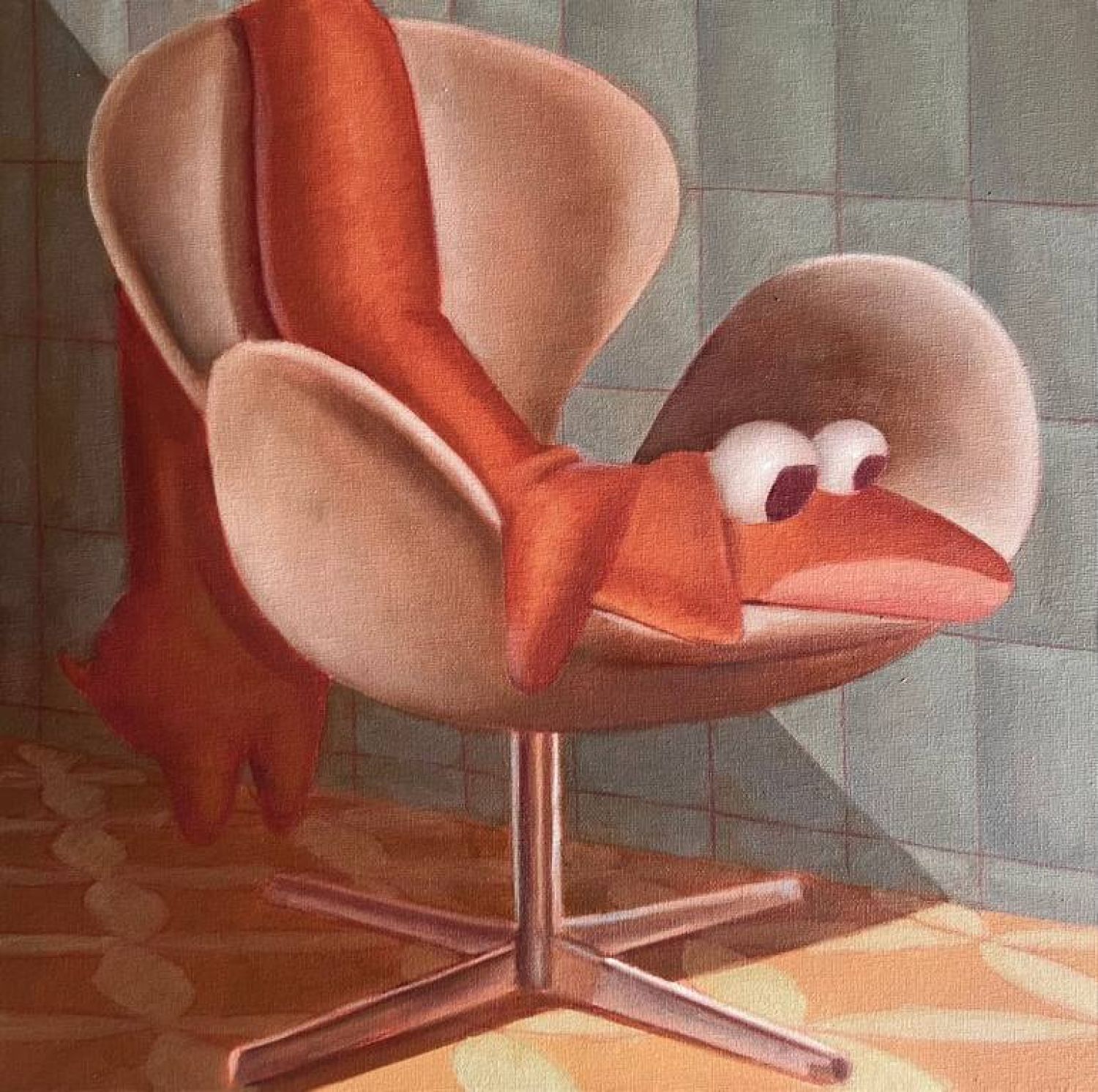
Safe your Shape

oil on canvas
40 x 40 cm
When the vision of a world-class furniture designer transcends mere aesthetics, it becomes a miniature piece of architecture engineered to "release" and "embrace" all weariness. In this space, the dachshund serves as a metaphor for humanity in its most defenseless state—surrendering entirely to absolute comfort and pure trust.

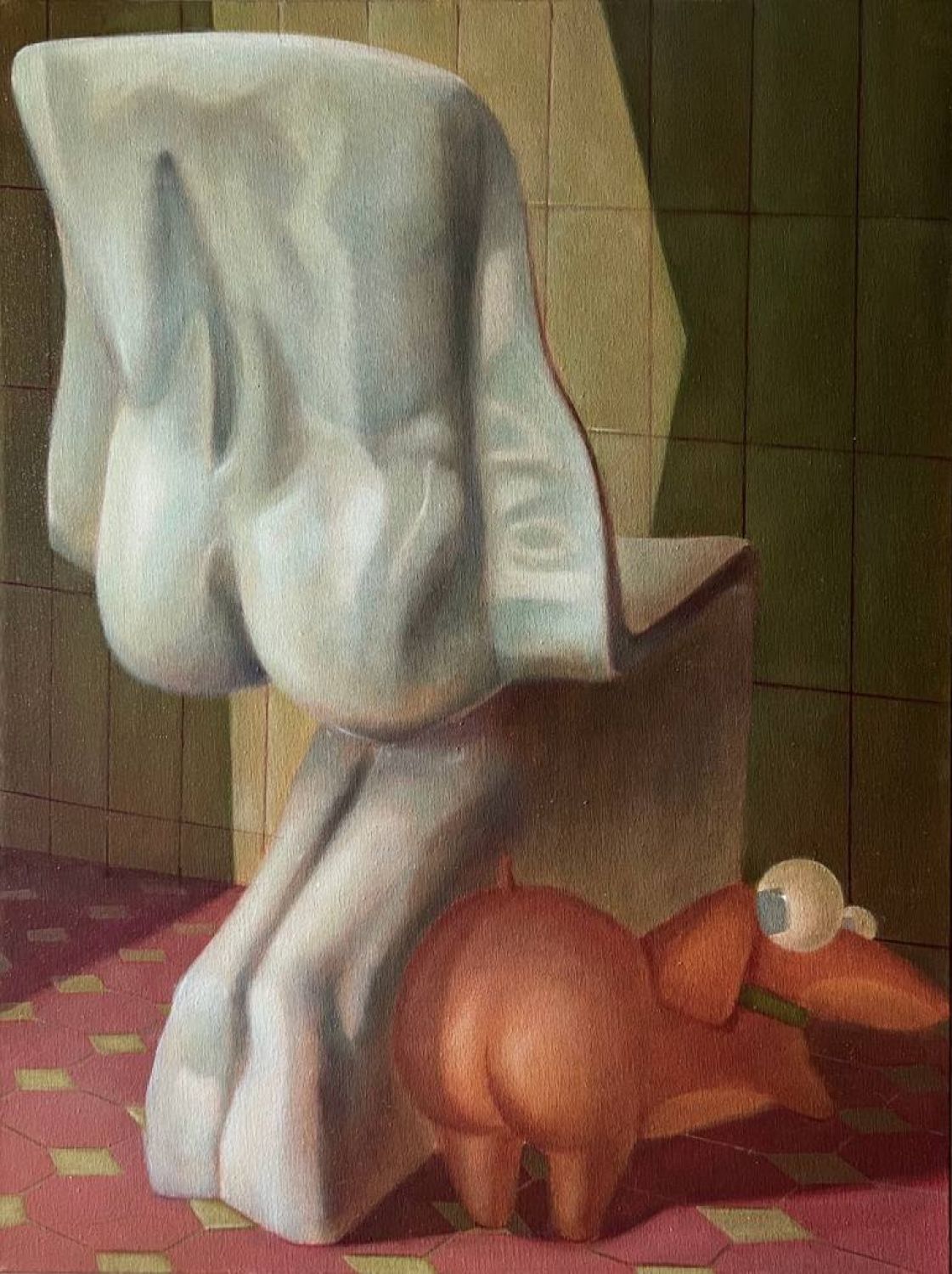
Him

oil on canvas
60 x 80 cm
This artwork is inspired by the iconic Him & Her Chair designed by Fabio Novembre.
We often see chairs as ordinary everyday objects, yet every design piece may quietly contain the intention and spirit of its creator.

In an era where beautifully designed furniture surrounds us everywhere, we may have begun to overlook the meanings hidden within them.
The small dog in the painting represents the viewer’s gaze — innocently questioning whether the objects around us are merely functional items, or if they carry perspectives, emotions, and unseen narratives that we have never truly noticed before.

Her

Inspired by the Him & Her Chair by Fabio Novembre, which originally explores the idea of “the human body transformed into a functional object,”

the body is not only something to be sat on or touched, but also something that is constantly seen, judged, and interpreted.

oil on canvas
50 x 70 cm
The cuteness and playfulness then become a kind of façade—masking a subtle sense of discomfort hidden beneath the surface.

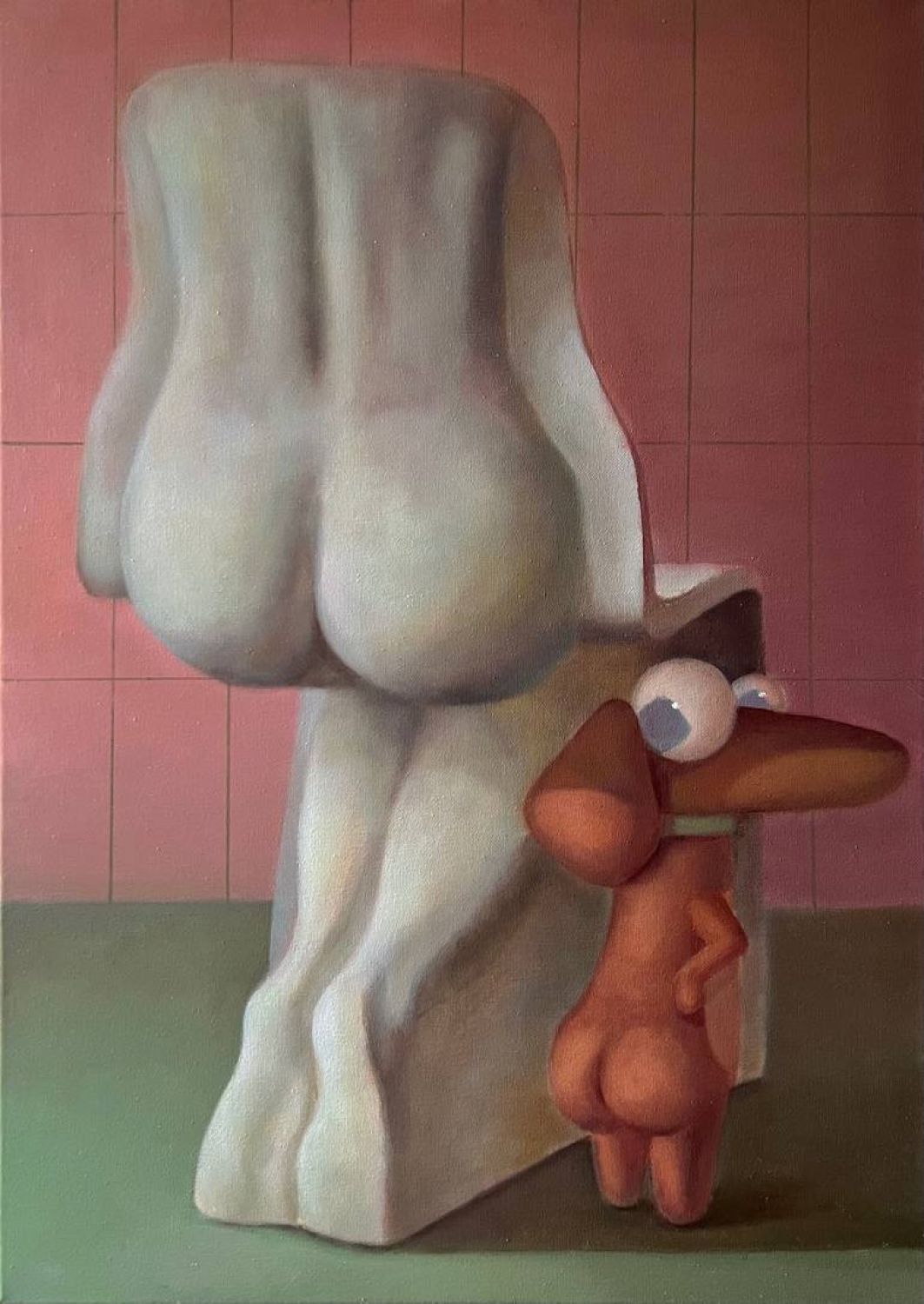
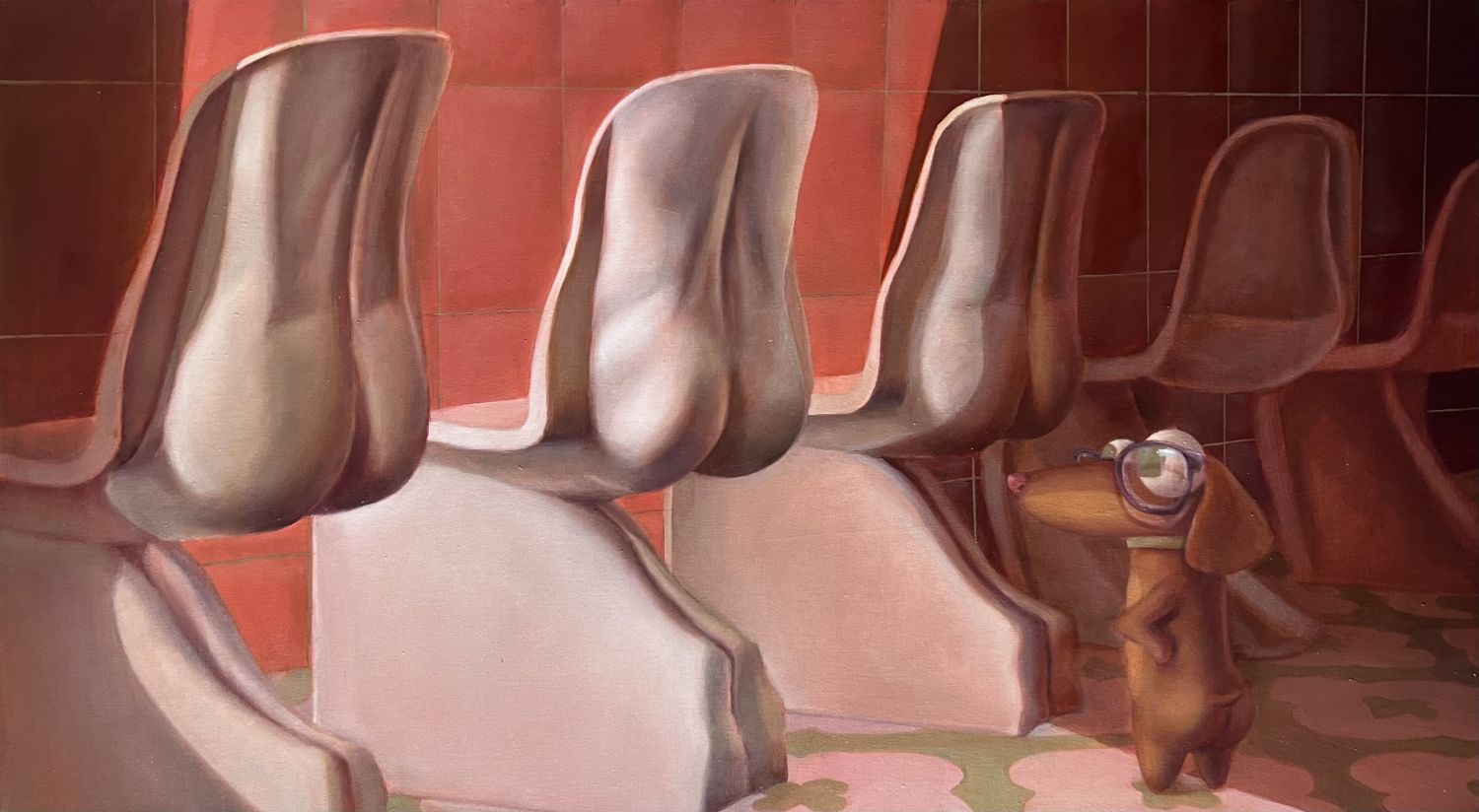
The Shape of Attention

oil on canvas
50 x 90 cm
This work explores the relationship between seeing and the construction of meaning through a design object that exists between a chair and the human body—Him & Her by Fabio Novembre. Positioned in an ambiguous state between object and identity, the work questions how perception shapes the significance we assign to what we see.

The viewer’s perspective is represented by a character wearing glasses, symbolizing the conceptual frameworks through which we perceive the world. The object that becomes the focus of this gaze is interpreted as possessing sexual connotations and is consequently recognized as a body with identity and meaning. In contrast, the same object outside the viewer’s attention is reduced to an ordinary chair—Panton Chair by Verner Panton—devoid of identity or symbolic significance.

This contrast suggests that meaning is not inherent in the object itself, but is constructed through acts of looking, attention, and interpretation. Perception is conditioned by social contexts, cultural values, gender roles, and expectations that have been shaped across different historical periods.

In this work, looking is therefore not merely an act of seeing, but a process of selecting, assigning value, and defining identity. Conversely, what remains outside the gaze is left to exist as an ordinary object, stripped of significance.

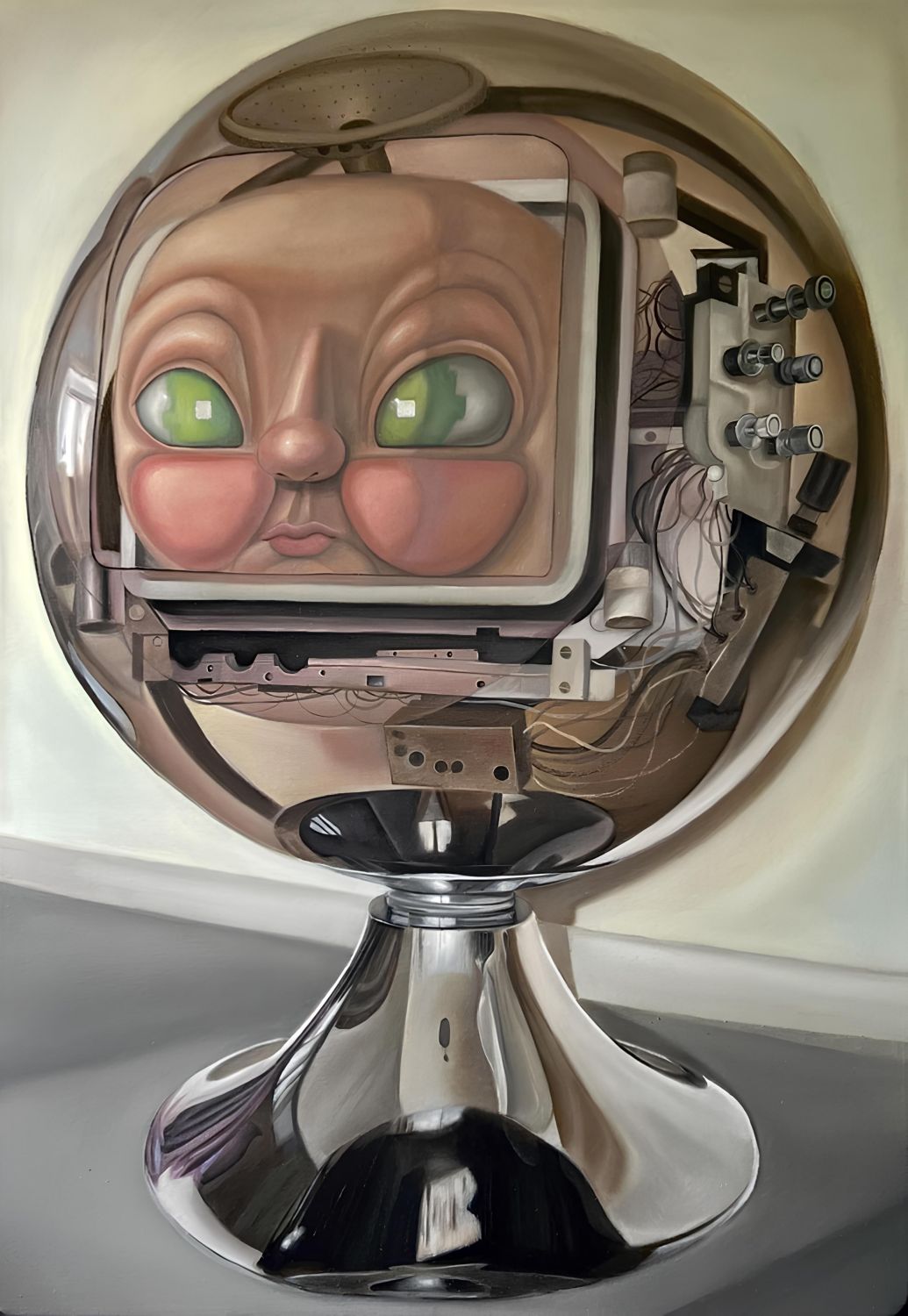
MEMORIES O N A TELEUISION

oil on canvas
70 x 100 cm
The work presents a metaphorical relationship between the body/personality and objects that society deems "beautiful" but lacks functionality. The shiny, curved, and symmetrical Space Age objects symbolize external perfection, while the strange face/appearance within reveals gaps, discomfort, and alienation. When juxtaposed, the work evokes a dialogue between the object's ornamentation and the incongruent existence of the self. This "mismatch" is not simply a problem of form, but a social condition in which the expected fit into the context is misplaced.

In terms of materials and presentation, the use of glossy surfaces and internal mechanical elements (wires and components) evokes a close connection with technology and mass production, reflecting the commodification of the peculiar into beauty. The work thus questions the fetishization of people and objects as mere accessories within the consumer system.

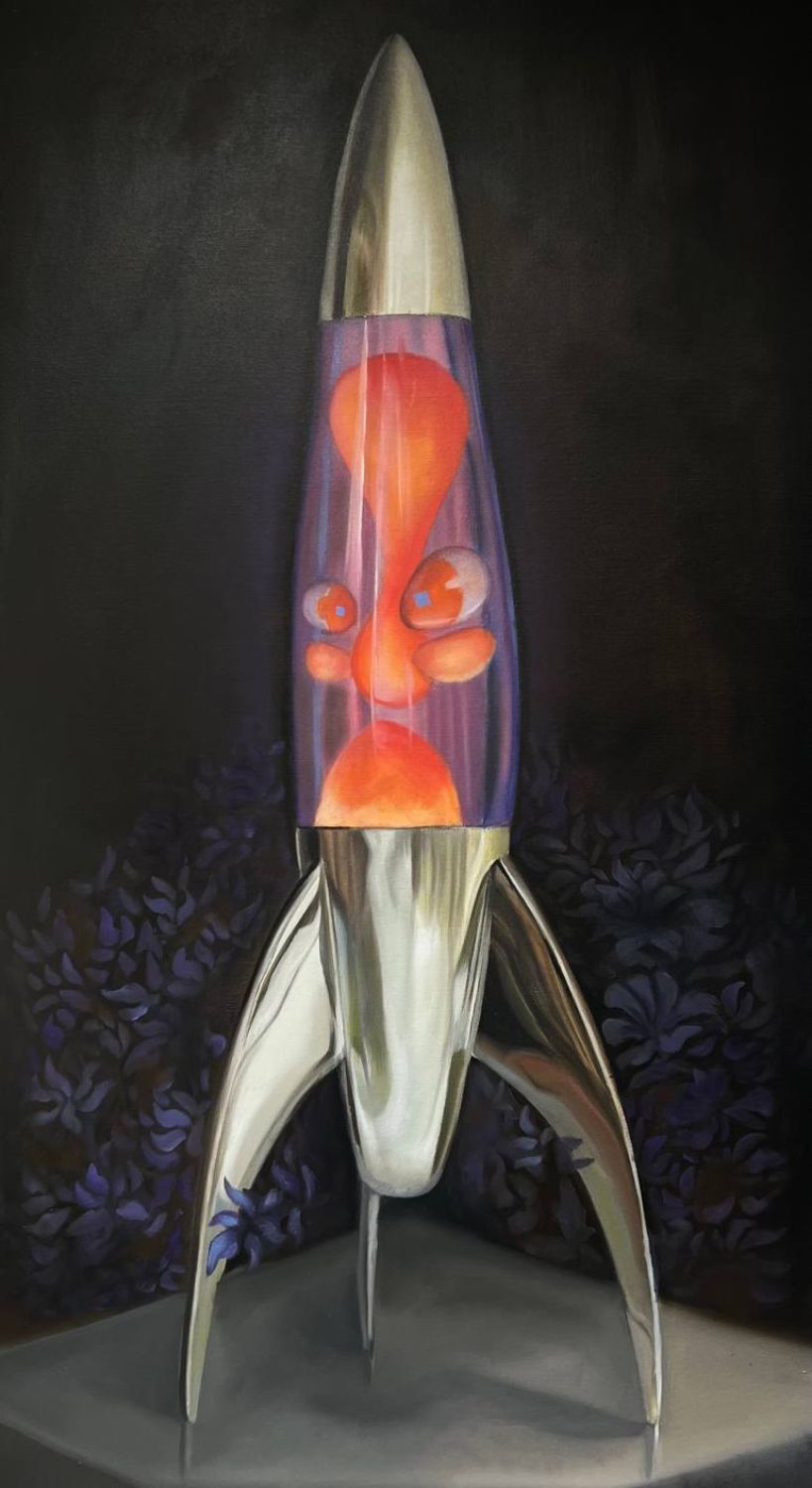
False Light-True Growth

The flower petals in this work do not grow under sunlight, but beneath the artificial glow of a mid-century lava lamp. It is a warm yet unfamiliar light—not one that belongs to nature, yet enough to sustain life. A light that was never meant to nourish becomes a source of survival, and the flowers choose to grow within these imperfect conditions.

This work invites viewers to reconsider the idea of growth. Perhaps growth does not depend on the light we are supposed to have, but on our ability to make use of the light that is actually available to us.

Like the flowers, human beings do not always emerge from ideal environments. Even in imperfect circumstances, we continue to reshape ourselves, drawing strength from whatever small light is present—however artificial, fragile, or unexpected—to keep moving forward.