SHOWCASE

/ ARTIST / 2026

ARTIST: Paul Grangure
COUNTRY: Romania
CONTACT: https://www.facebook.com/paulgrangure/
instagram.com/littlelight349/
Living in Thailand, Bangbon, born and raised in Romania, in the city of Lugoj, I graduated from the Politechnic University of Timisoara. Following my technical knowledge I also started creating graphic drawings and oil paintings. By the 90s I already hosted a couple of painting exhibitions.
In the year 2000 I obtained a scholarship in Tokyo, Japan, at the Technical University. During my stay there I continued painting my original creations. The stay was completed with both a technical presentation at the Osaka Conference, and a successful painting exhibition in Tokyo.

Recently my artistry is expressed in wood carving, bringing my original views back to life by combining natural lines with ideologies and neo modern abstract concepts.

Motto: "I dont carve the bridge, only its two shores and let the viewer cross safely"

Totema

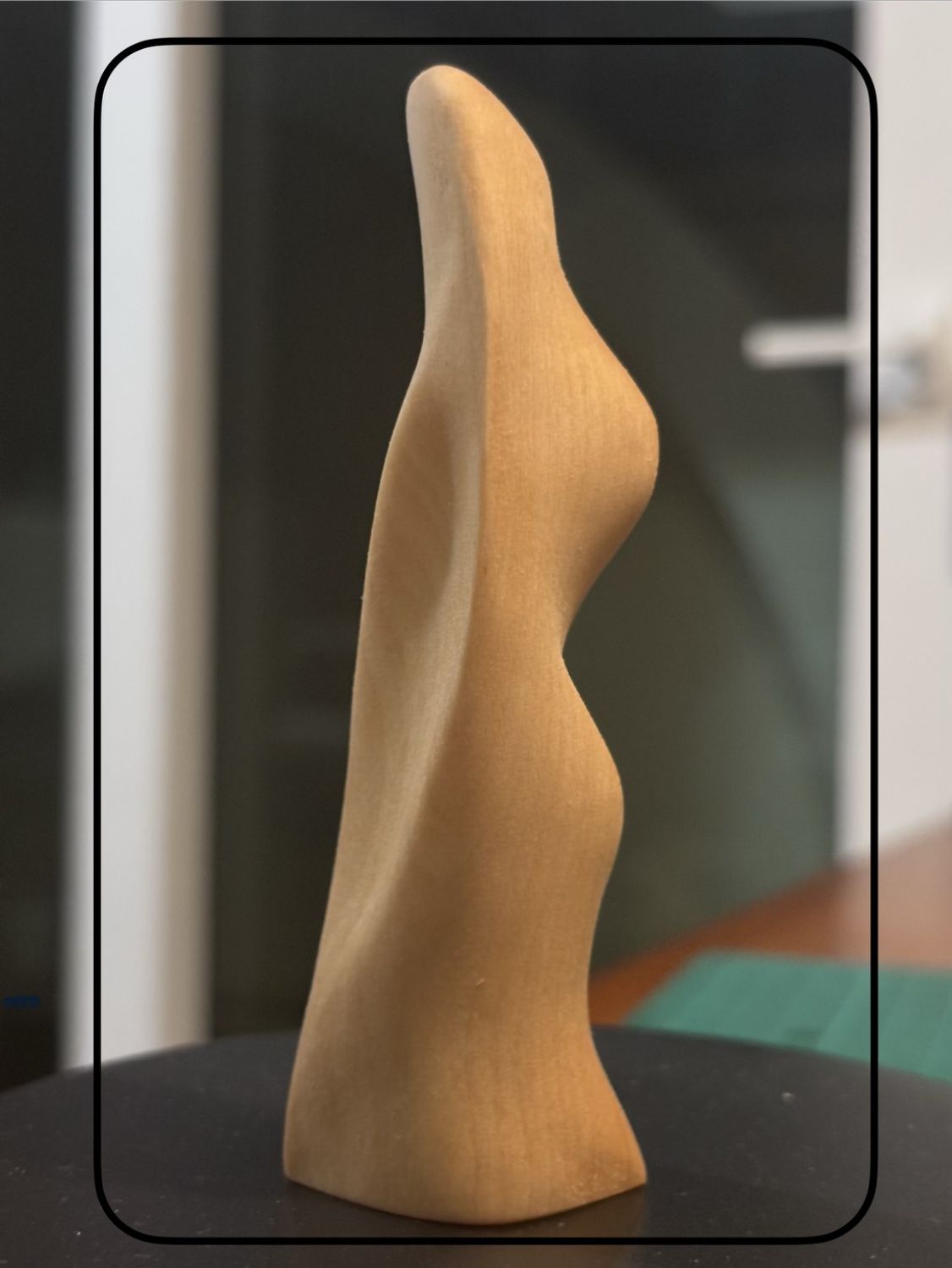
his sculpture balances solidity and absence through a slender vertical form carved from wood. A triangular void cuts into the lower body, introducing negative space that activates the piece and guides the eye upward through the figure. With only a few carefully shaped volumes—the gentle projection of the chest, the narrowing waist, and the softened contours of the torso—the sculpture suggests a feminine presence while remaining strongly reduced and abstract. The wood grain reinforces the upward movement, while the smooth surface allows light to glide across the curves and edges, emphasizing the quiet elegance of the form.

As the sculpture rotates, its character shifts. From the front it reads as a minimal feminine silhouette, but from other angles the geometry of the carved hollow becomes more pronounced, transforming the figure into something more archaic and totemic. This interplay between organic curves and decisive geometric cuts creates a dialogue between the human body and symbolic form. The result is a piece that moves between intimacy and monumentality, revealing its narrative gradually through motion and changing perspectives
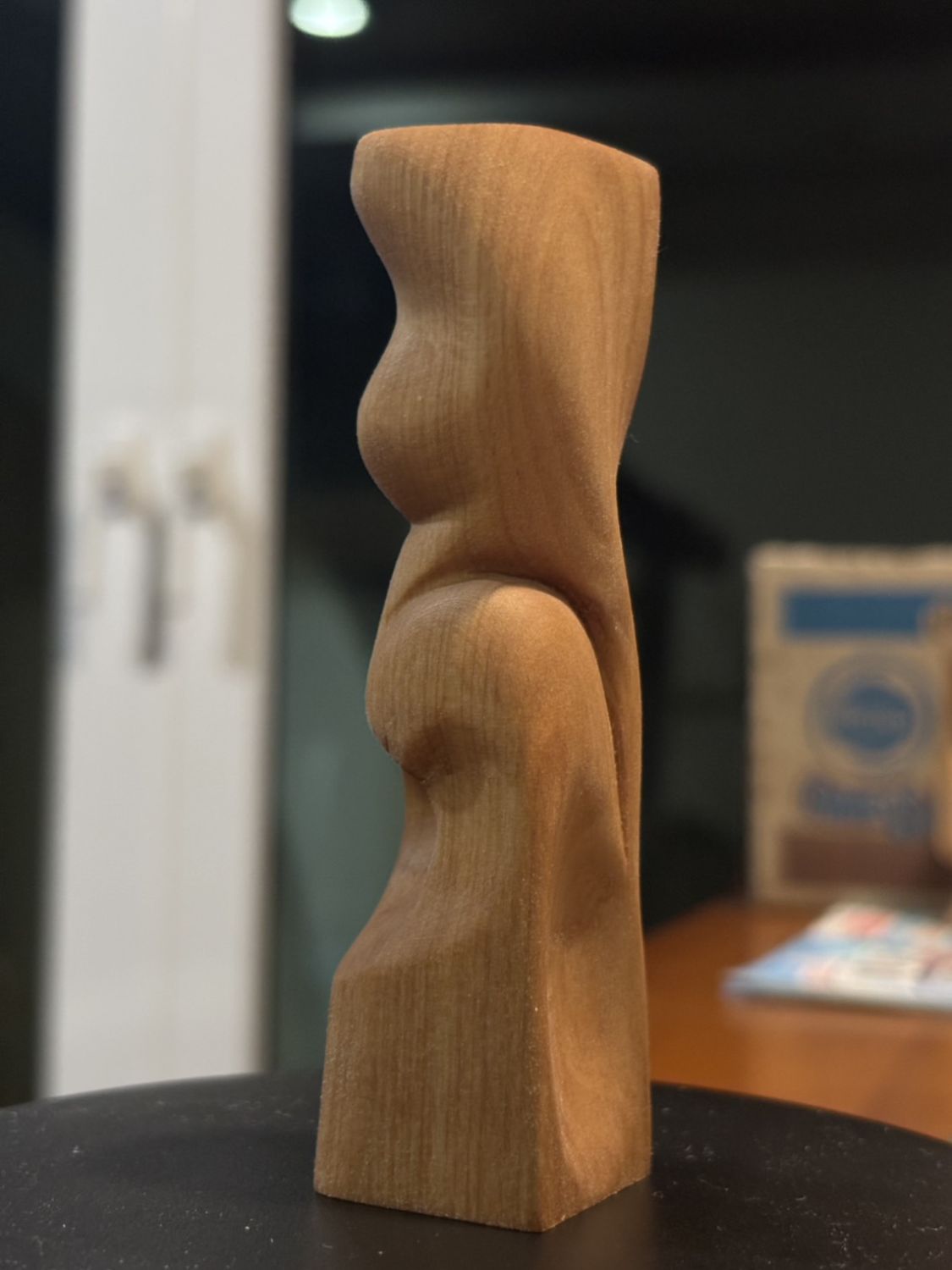
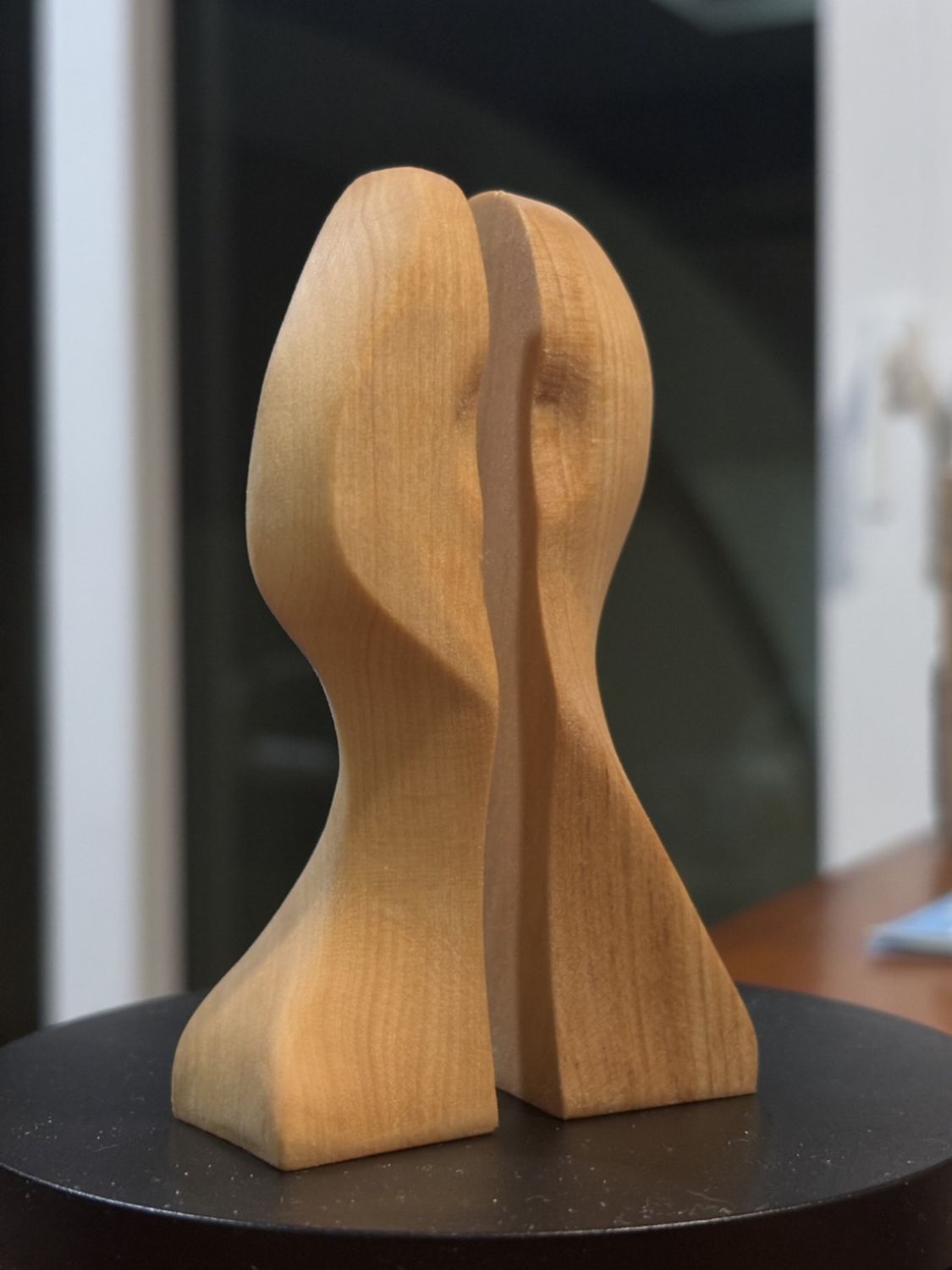
Mother and Child

“Mother and Child” explores protection, closeness, and emergence through simplified organic forms. The sculpture avoids direct representation, allowing the relationship between the two volumes to speak through balance, tension, and negative space. From different angles, the piece shifts between unity and separation — a quiet study of connection carved from a single block.

Twins

At first glance, the sculpture appears as a single form—balanced, complete, and self-contained. Only when it opens does its hidden nature emerge: two figures facing one another, sharing a space that existed long before either stood alone. The work explores the paradox of twinhood, where individuality and connection are inseparable.

The inner contours suggest two quiet presences revealed through separation rather than addition. What seemed whole becomes a pair; what appeared singular reveals a relationship. The sculpture reflects the unique bond of twins—distinct lives that begin together, forever carrying the memory of a shared origin.

Cut to Center

This piece shifts as you move around it—one angle suggests a figure holding something close, another breaks into something sharper and more architectural. A petal-like form sits tucked within, carrying a quiet sense of protection and exposure at once, while the angled top leans forward with subtle intention. The flow pulls the eye in and releases it again, letting the form stay open rather than fixed.

Tease

It rises in a single, deliberate gesture, leaning forward as if drawn toward something just out of reach. The surface slips inward and then gently releases, shaping a form that seems to flirt with recognition—never fully becoming, yet never completely abstract. From one angle it suggests something bodily, from another it softens into a petal-like fold, always hovering in that in-between space.

There’s a quiet playfulness in how it reveals and withholds at the same time. One side carries the motion, while the other stays reserved, letting the silhouette remain clear and uninterrupted. It doesn’t declare what it is—it lingers, inviting a second look.

Inhale

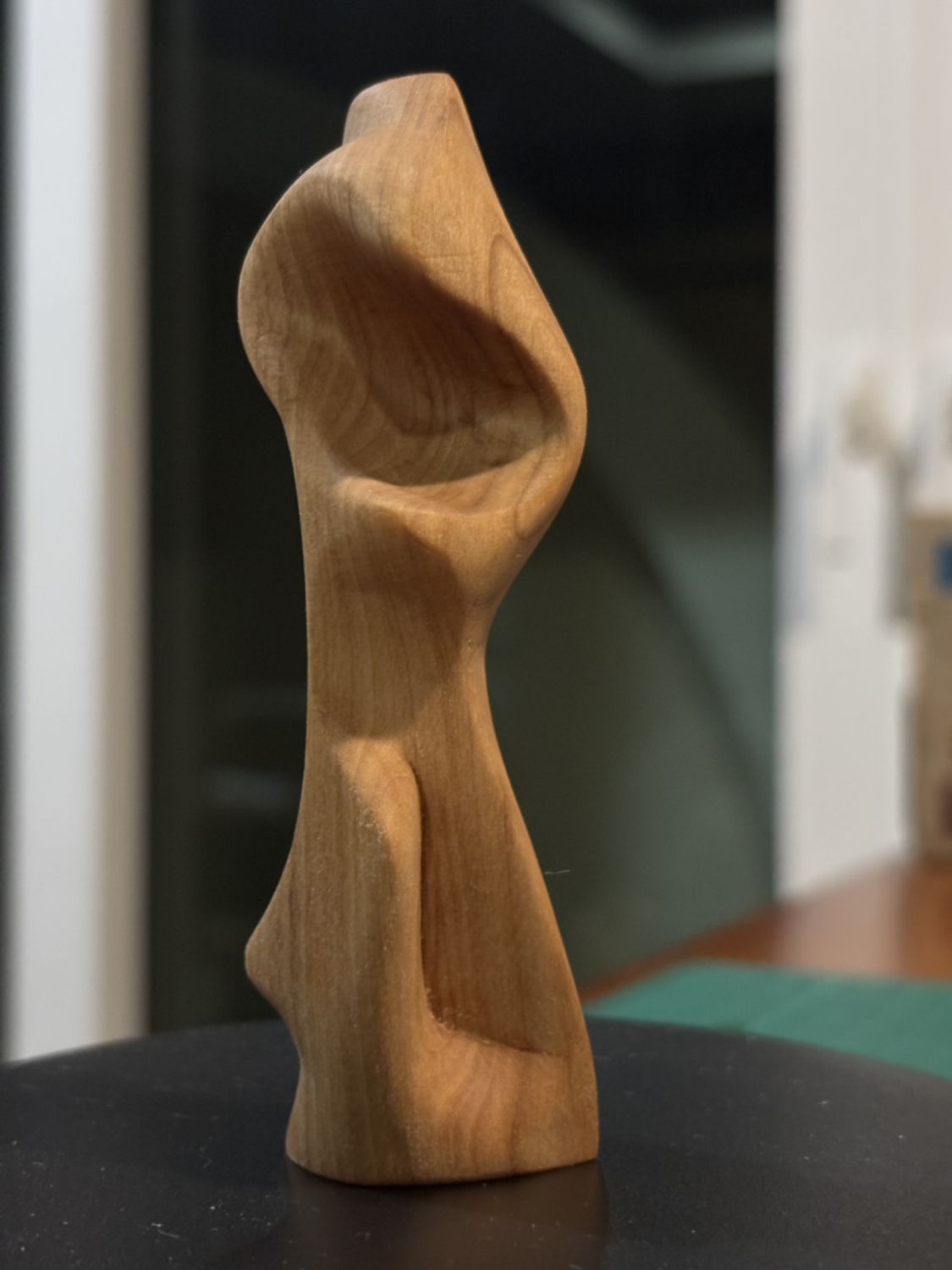
A quiet rise of form, where the surface seems to breathe rather than sit still. This piece carries a subtle vertical pull, like something gently unfolding from within, its curves neither forced nor decorative but earned through restraint. The hollowed gesture near the top feels like a soft intake—an opening that invites light to settle and shift as you move around it—while the lower protrusions ground it, almost like small anchors interrupting an otherwise fluid ascent. There’s a sense of balance between concealment and reveal, where each contour hints at something organic yet refuses to fully define it, leaving the viewer to complete the motion in their own mind.

Elephant

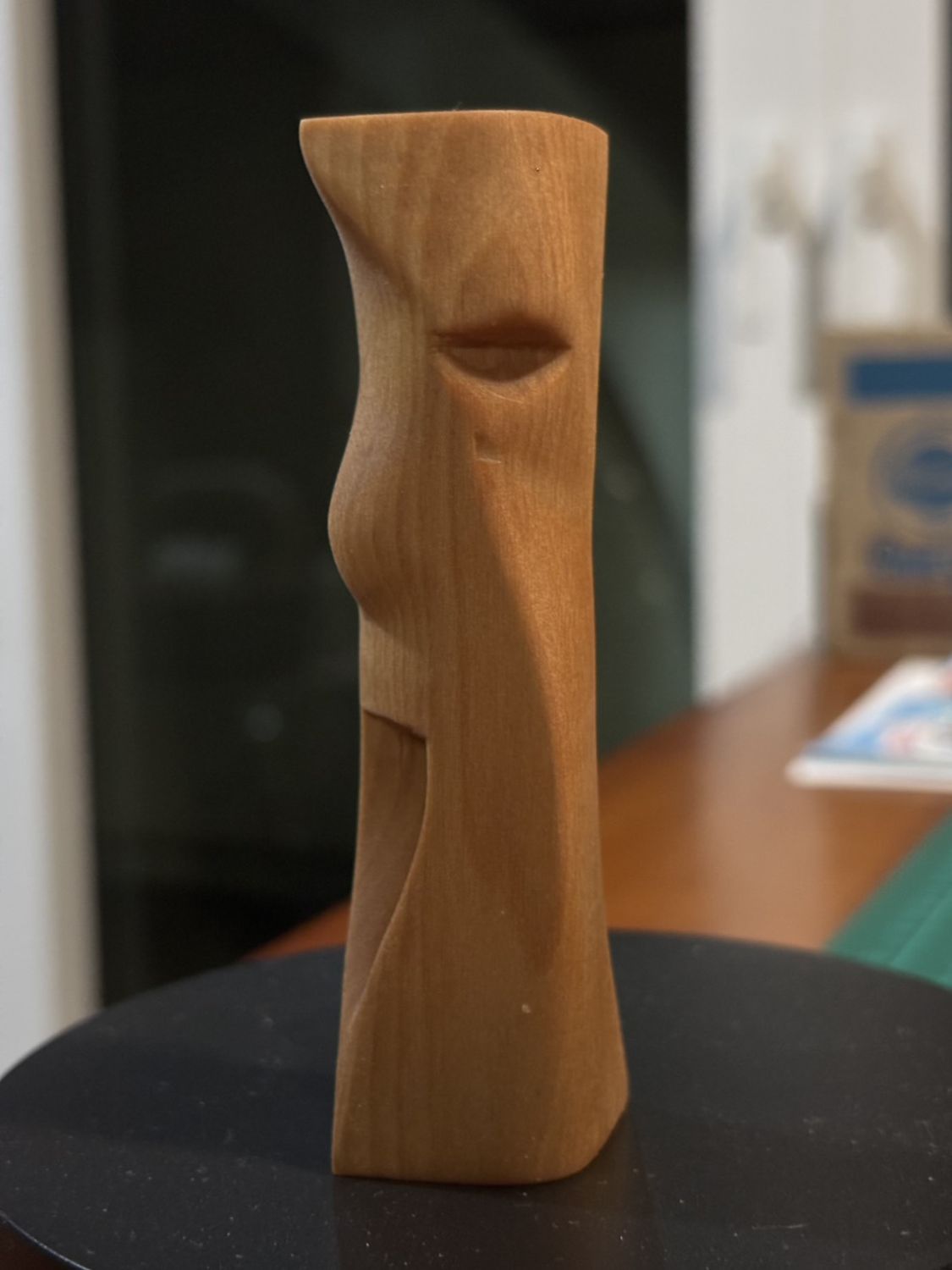
This piece stands with a quiet ambiguity that shifts between the organic and the suggestive, where a softened torso emerges from a more abstract, almost totemic base. The upper form carries a gentle, bodily presence—rounded, breathing—while the lower section dissolves into a carved void that feels less like absence and more like a channel, as if something is passing through or being drawn inward. From certain angles, the protrusions hint at animalistic references—an elephant’s mass or the curling suggestion of an octopus limb—but these associations never settle, instead hovering just beneath recognition. The asymmetry and subtle tool traces keep the surface alive, resisting polish in favor of a tactile honesty, while the vertical stance anchors the piece with a calm, grounded weight. It ultimately reads as a form in transition—neither fully figure nor creature, but something instinctive, shaped by both intention and discovery.

Geisha

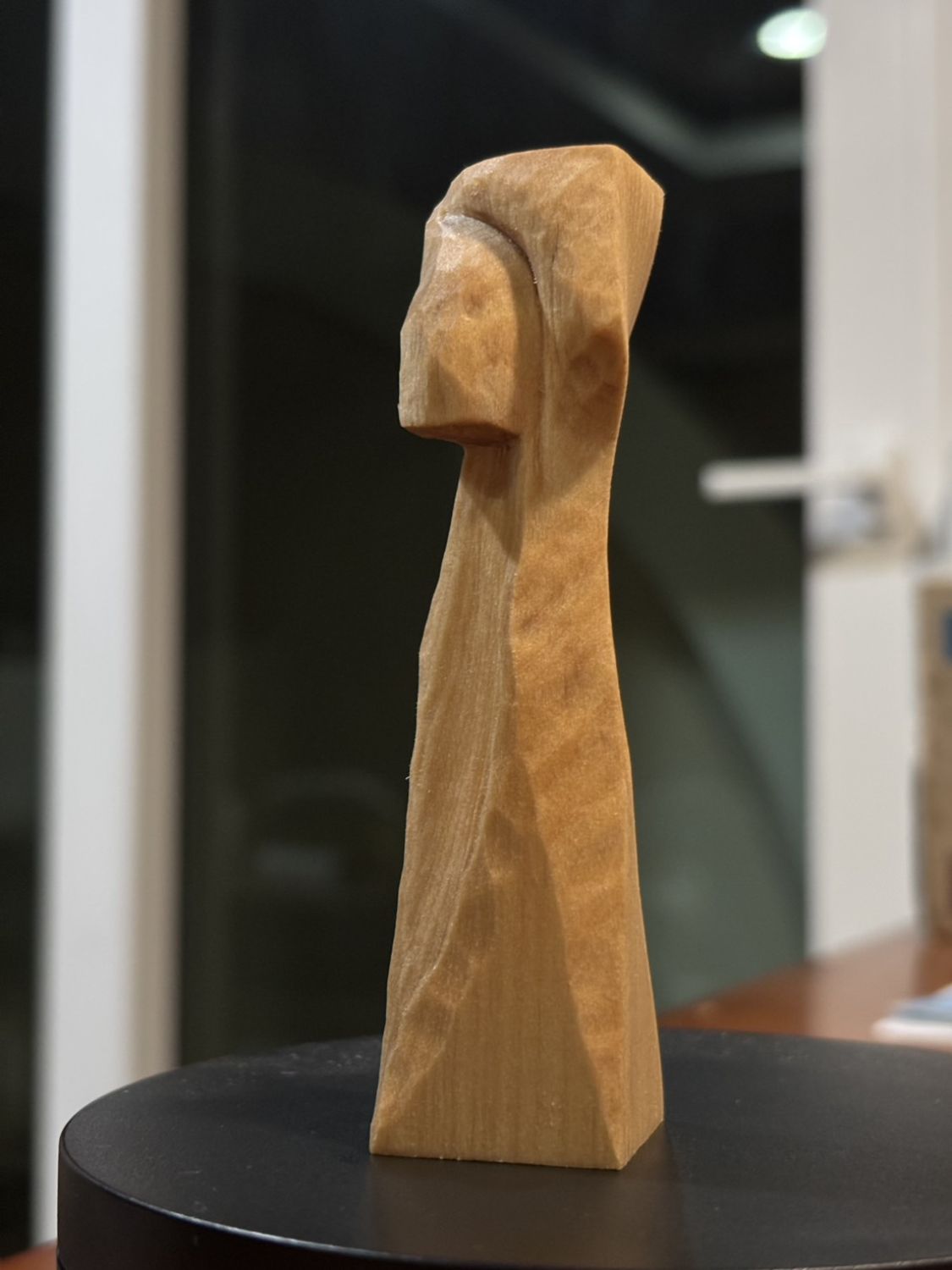
“Geisha” distills the figure into a poised, forward-leaning gesture that suggests presence through posture rather than detail, where the continuous flow from head to base creates a calm, grounded rhythm. The midsection protrusion reads clearly as the back knot of an obi, giving the otherwise fluid silhouette a cultural anchor without breaking its abstraction. The retained knife marks add a tactile honesty, contrasting with the refined simplicity of the form. Balancing softness with a quiet firmness, the piece feels minimal yet intentional, relying on proportion, gesture, and that single defining element to carry its identity.

Incline

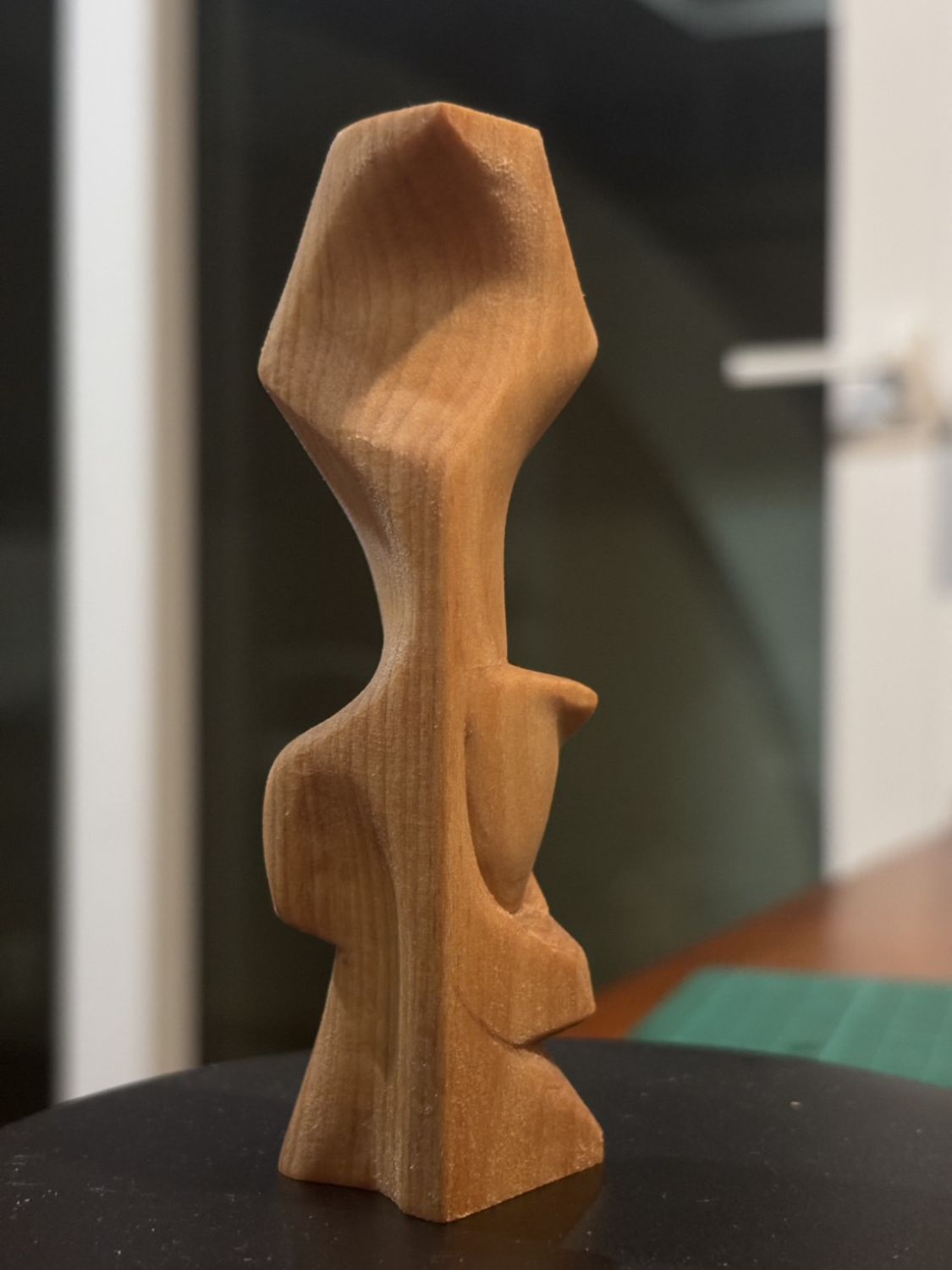
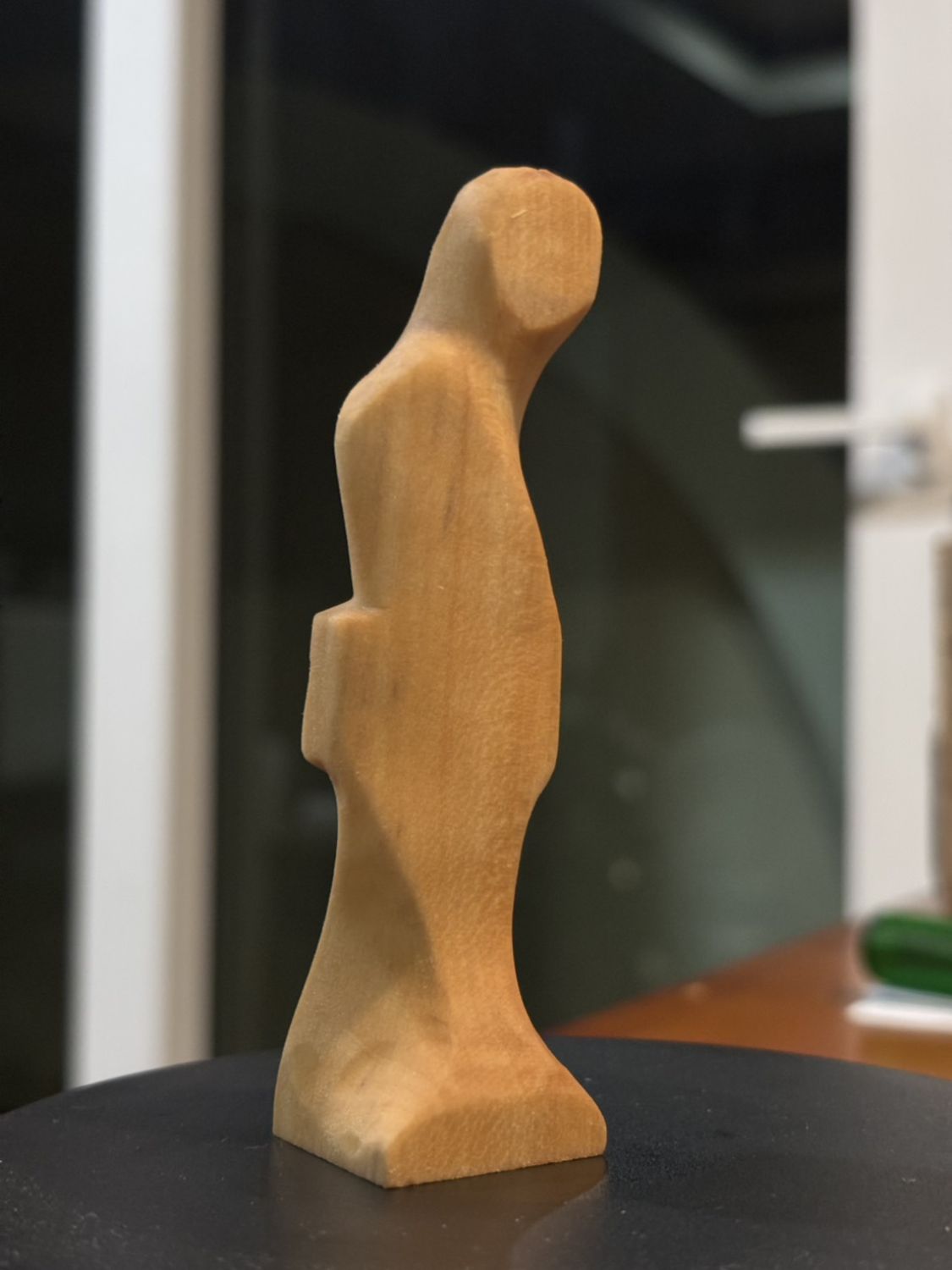
This piece leans into reduction with confidence, distilling the figure into a sequence of deliberate shifts rather than continuous flow. The head reads as a compact, almost architectural block, set against a long, tapering neck that subtly bends and twists, giving the form its sense of direction. That contrast—between the assertive mass of the head and the restrained, narrowing body—creates a clear visual hierarchy. The carved plane that sweeps down from the head introduces a decisive gesture, like a single stroke that defines character more than detail ever could. Tool marks are left just enough to animate the surface, catching light differently across facets and reinforcing the idea that the form is discovered rather than smoothed into submission.

What stands out is how the sculpture holds tension between figure and abstraction without committing fully to either. From one angle it suggests a human presence—almost a profile caught mid-thought—while from another it becomes a study in planes and transitions. The slight asymmetry in the neck and the off-centered relationship of the head prevent it from becoming static, giving it a quiet forward inclination, as if it’s leaning into something unseen. The base remains grounded and simple, allowing the upper movement to carry the expression. There’s a restraint here in not overworking the piece; it stops at a point where ambiguity is preserved, which gives it longevity—the viewer is left to complete the form rather than just observe it.

Pulse

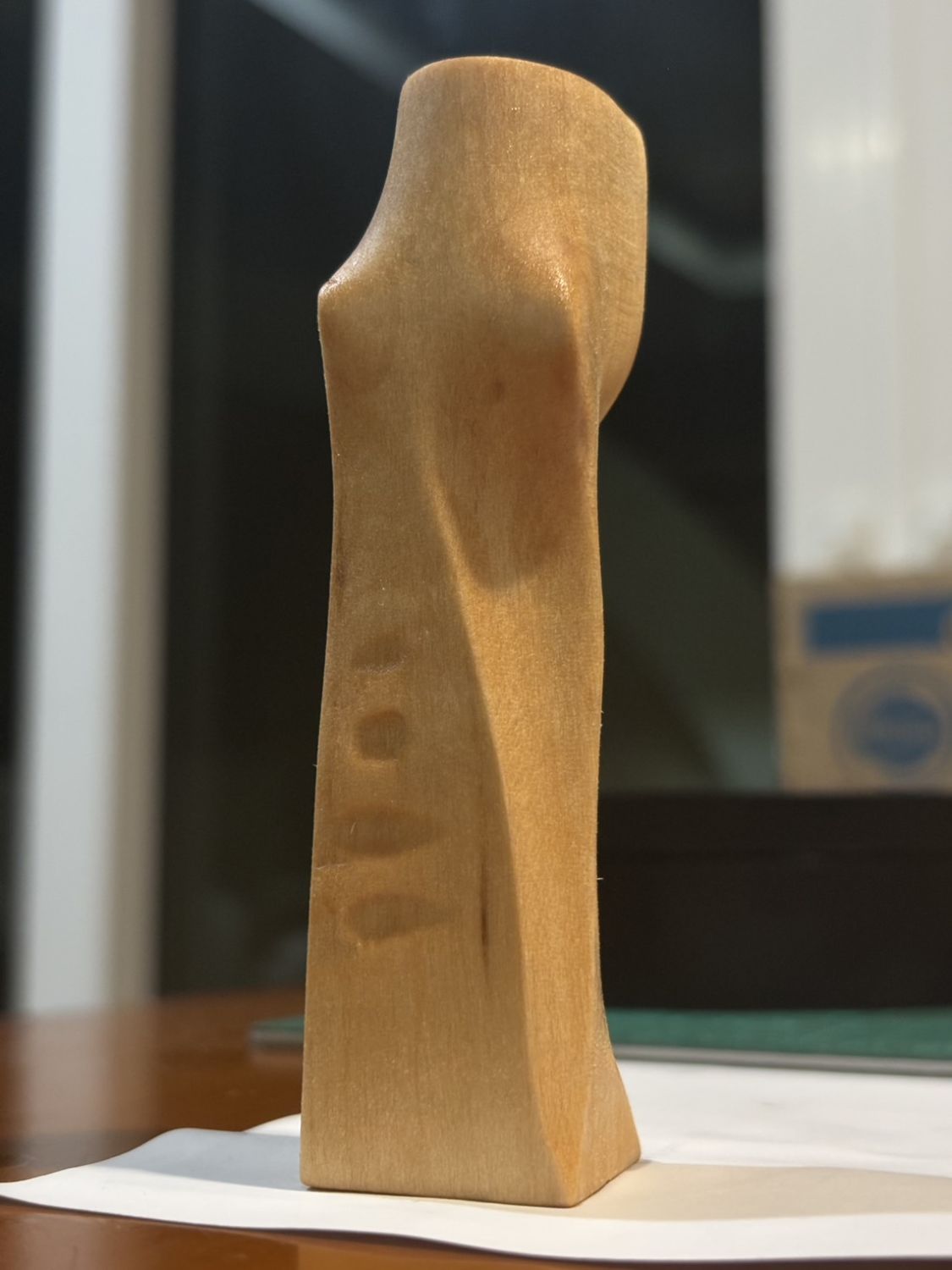
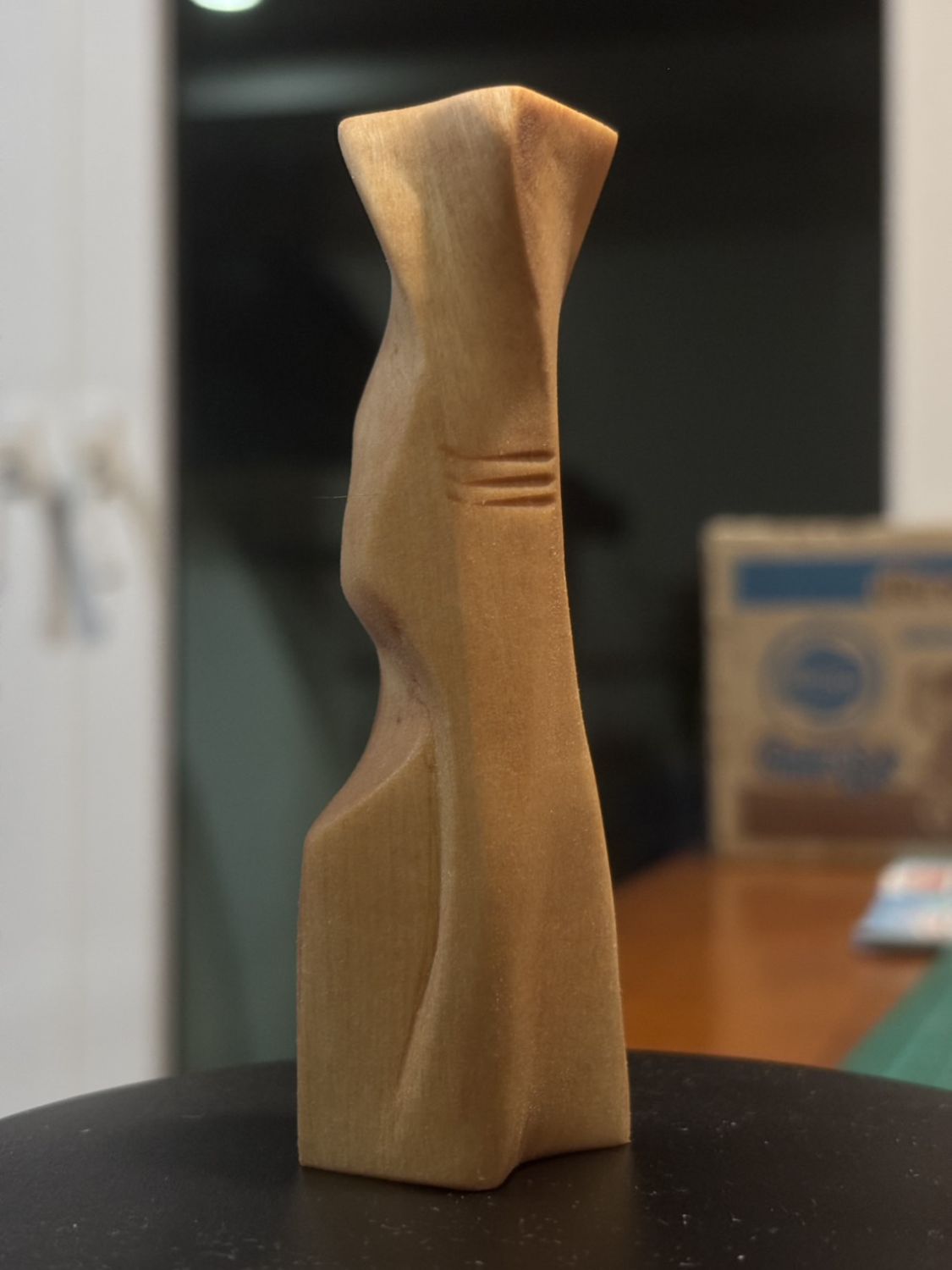
Some sculptures reveal themselves through detail. Others rely on what they choose to leave untouched. Here, the silhouette carries the conversation, while three carved lines introduce the only deliberate interruption in the surface. They suggest the rhythm of breathing—an echo of gill slits, where life is marked not by movement but by the quiet exchange between body and world. The form hovers between figure and abstraction, inviting different readings from different angles. Rather than describing a body, it explores presence through proportion, restraint, and the natural warmth of the wood, allowing each viewer to complete the story in their own way.