SHOWCASE

/ ARTIST / 2026

ARTIST: Sophie Piczenik
COUNTRY: Thailand
CONTACT: https://www.instagram.com/piczenik/?hl=en
sophiepiczenik@gmail.com
Sophie Piczenik is a 25-year-old Thai and English Visual Artist & Fashion Pioneer. She is passionate about cultural storytelling through Art, Fashion and Journalism. ​
Currently, Sophie is exploring her Thai Heritage through illustrations and writing, focusing on the media's misrepresentation of Thai culture.
She is the co-founder of the brand 'OLYANG-OLYANG,' a Thai womenswear brand with a mission of creating something that represents the 'Luk-Kreung' or 'mixed race community.
When she is not doing the above, she enjoys outdoor activities and the gym. She also has a great love for classic literature, specifically Russian.

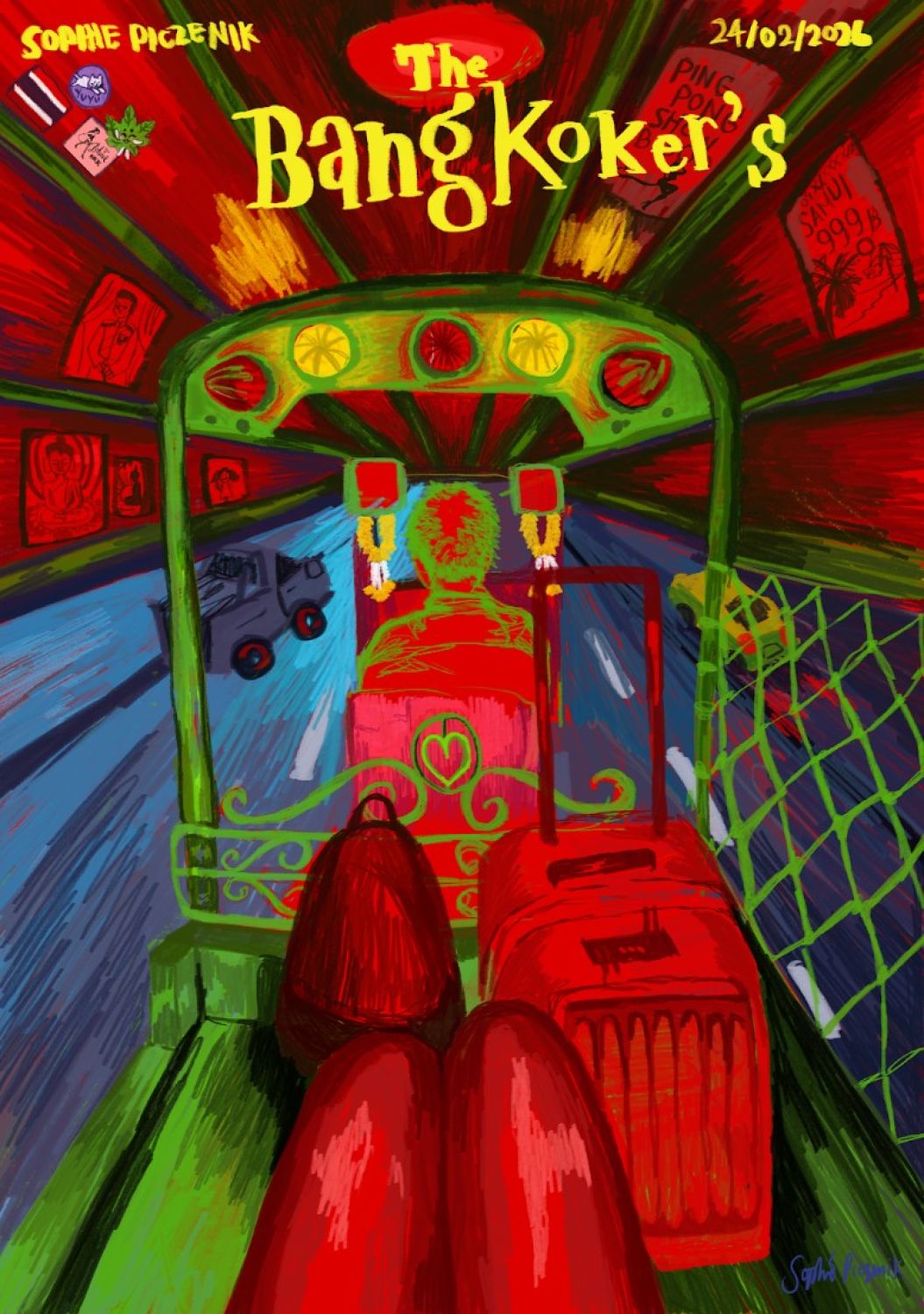
The Bangkoker's no. 0004 The Tuk Tuk Driver

#thebangkokers no. 0004
This Tuktuk driver is 73 years old. My late Dad passed away 5 days after he turned 73.
The average retirement age by the global statistics is 65 years old but these old men cannot stop. The 600-1000THB pension (£25) per month is not enough. I have met some elderly drivers that are in ill conditions. They should be at home with their grandchildren 700 kilometers away from Bangkok. I am not justifying some of the bad behaviors from our tuktuk and taxi drivers. They are tough people to deal with. They cheat and rob and I, too, struggle to deal with them everyday as a white looking Thai person. But this is having compassion. I hate that they protest and pick their customers and only want tourists. I hate that they don't know any better but to conform to the capitalistic society we are living in. I hate them but I know it is not easy for them either. I am not saying, show them their utmost respect and bow down to people just because they are old. Fuck that. This is adding context. This is putting ourselves in their shoes. This is seeing human as human and not enemies
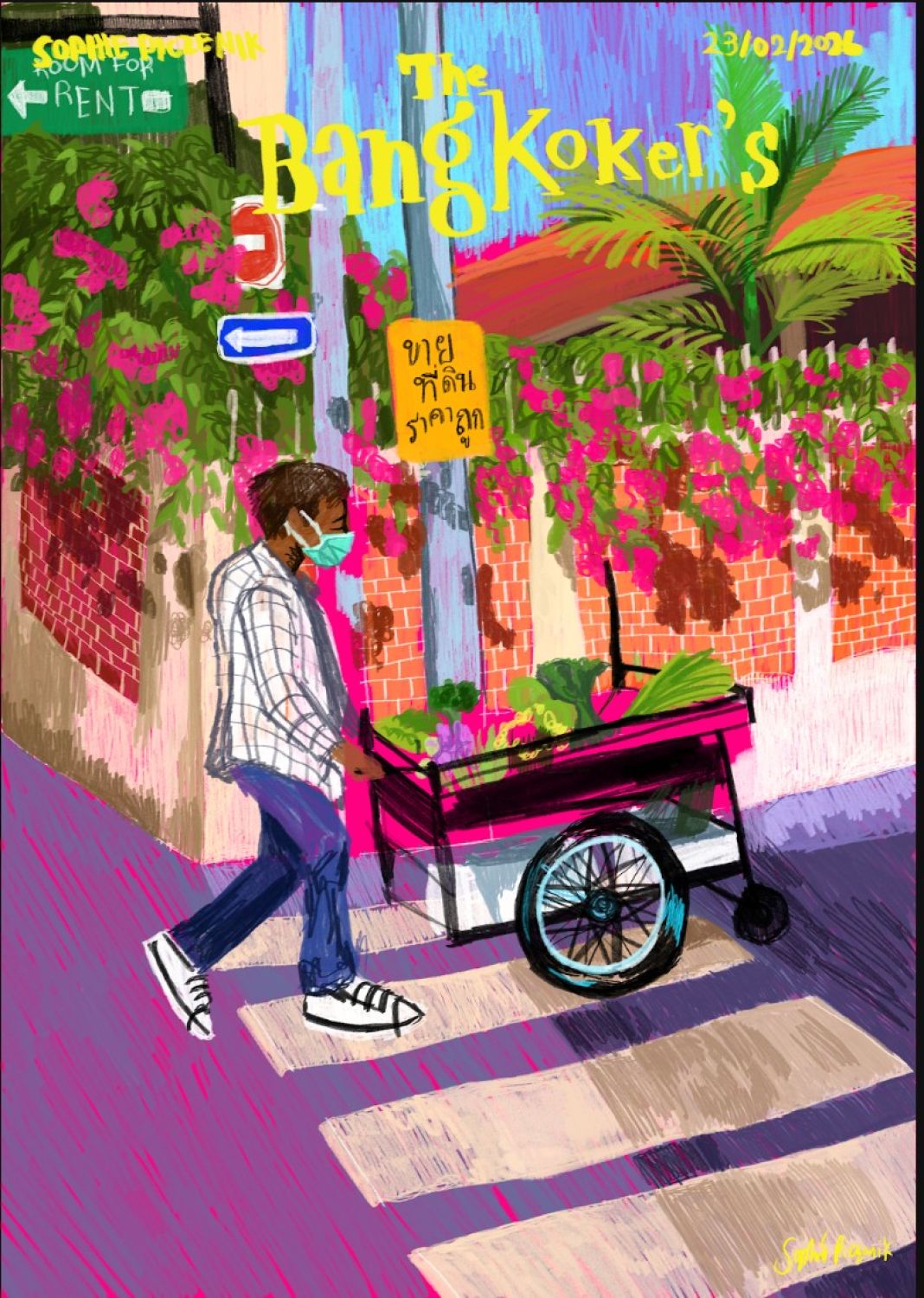
The Bangkoker's no. 0003 The Vegetable Cart

#thebangkokers no. 0003 This is a difficult one. While I give out a lot of (unsolicited) lecture out on how one must not romanticize other's suffering, particularly in a country that is forever developing such as Thailand, one can give them a nod in respect to their resilience. I do not want to hear "they have so little yet are so happy." One could argue, that me drawing this man and his vegetable cart is an act of creating or feeding into the poor country aesthetic but rather than saying, "the chaos is real and beautiful," I invite you to see it as something that shines a light on blue collar workers. They wake up and walk around Bangkok all day in the scorching sun. And they have to. They show up for themselves. Every single day. This is a strength but this is also a reflection on the political landscape. This is, respecting how hard the people of my country work, and this is why they deserve so much more.

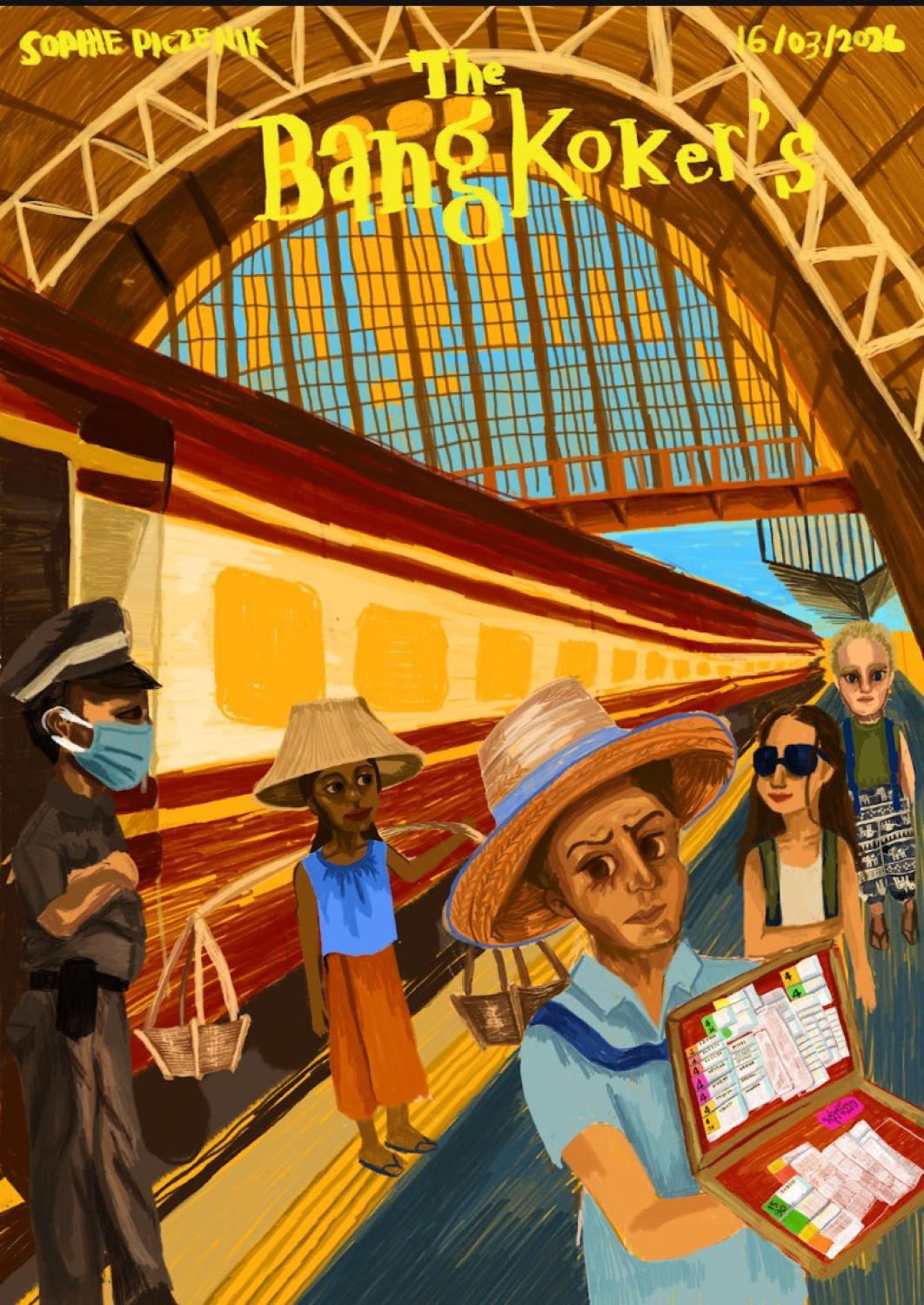
The Bangkoker's no. 0010 Hua Lampong

#thebangkokers no.0010 This is Hua LamPong (ft, the lottery guy)

Under the vaulted heat of Hua LamPong station, where steel arches hold up more than just a roof, a different kind of journey unfolds. Not everyone here is waiting for a train, some are waiting for luck.

The lottery guy appears from no where. To everywhere in Thailand. Specifically on the last week of the month and the second week. (Lottery is drawn on the 1st and 16th of every month.) He shouts, พรุ่งนี้รวย! (Get rich tomorrow)

Tickets fan out like fragile promises in the vendor’s hands, each number a story, a gamble, a quiet belief that their life can be safe in an instant. Around him, worlds collide: workers, travelers, dreamers. Each carrying their own reasons, their own hopes scribbled between digits.

In this city of motion, the lottery is a pause, a moment where fate feels close enough to touch, sold not in certainty, but in possibility.

This is the sadness of Thailand. Locals get in great debt of gambling their life away with hopes that tomorrow will be better than today but so much that working hard is not enough. This is seeing how the culture of believing that being save by faith is greater than pinpointing the reality of a corrupted government. I am born without luck, they would say.

My maternal grandma used to get superficially ill on the day the lottery is drawn. Asking my mother for more money as she has already gambled her allowance away. She lies on the bamboo bench with her arms on the back of her head with internal pain. Maybe in the next life, I will be born rich.

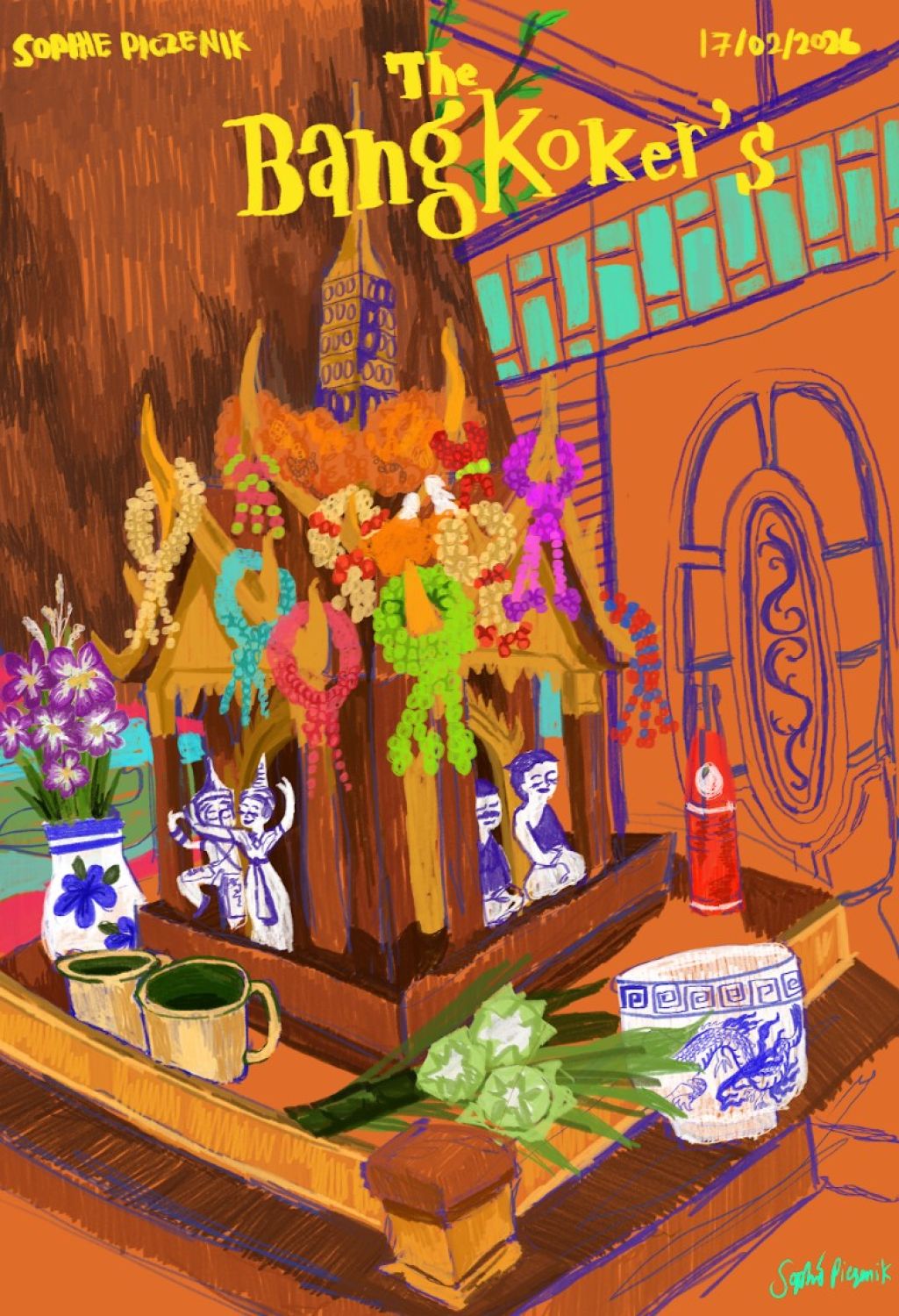
The Bangkoker's no. 0002 The Spirit House

#thebangkokers no. 0002 This is about making peace with the beliefs and religion of my home country.

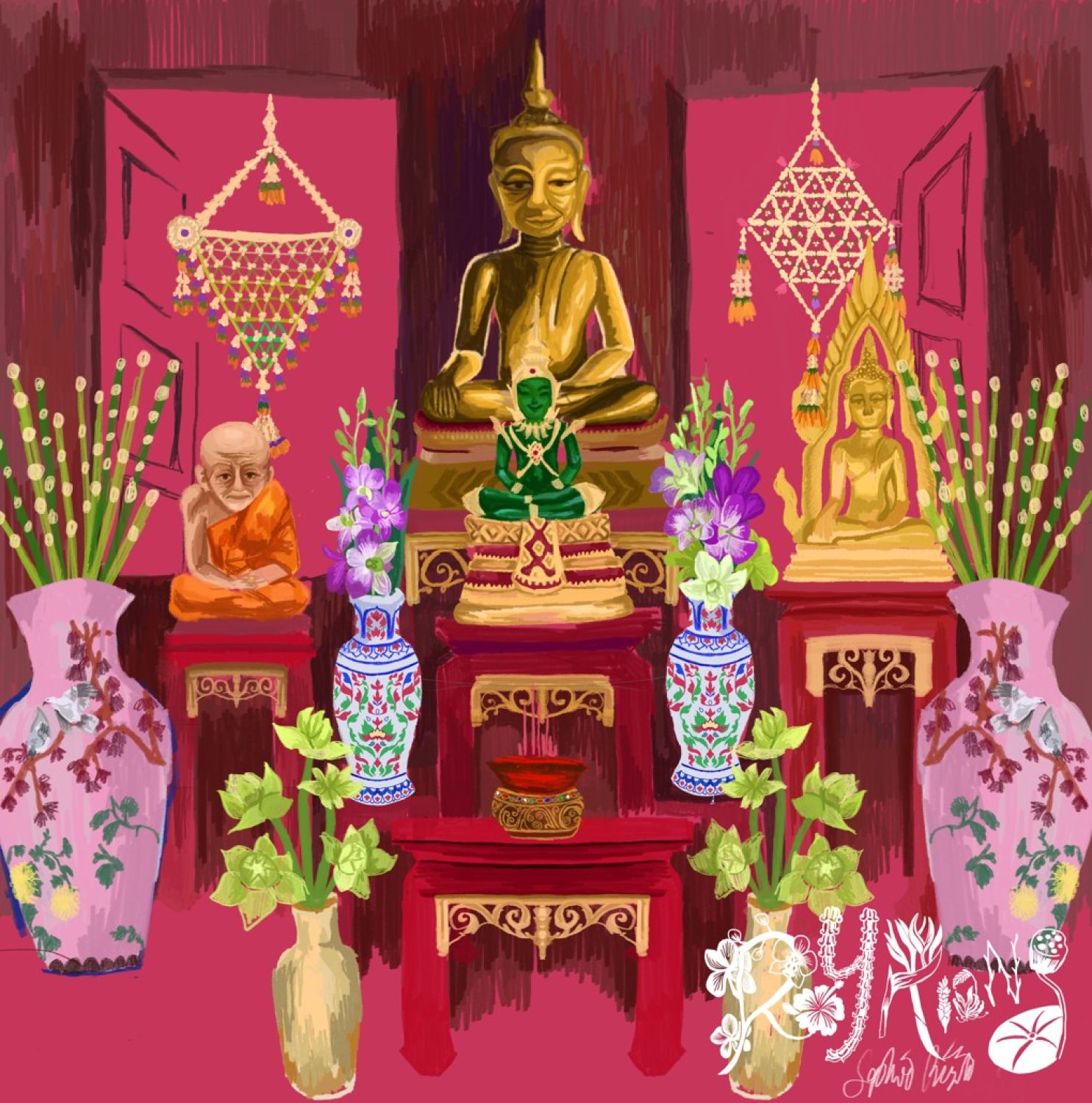
Royriang: the floral arrangements in a home altar

This is a โต๊ะหมู่บูชา (Toh-Moo-Boo-Cha) in a ห้องพระ (home altar) but an amplified one. Meaning that this is one of a posh household. (Note the garland hanging from the window frame.) I grew up with one though as not decorative as this, my Mother was a minimalist.

I had always find the flower garlands and arrangements used in Buddhism soothing. The choices of flowers are also interesting. They are delicate and has a shorter shelf life than most. Cheap and accessible in a tropical climate. But local buddhist care careful to arrange them. So much thought has been out into crafting something that has a short live and for something so intangible. Great reflection on the people and culture :)

I also found it soothing that one might or might not be a follower of Siddharta but one is allow to sit in peace with respect in these rooms.

It is things like this that make me fall in love with my country again. It is properly "seeing" rather than just glancing.

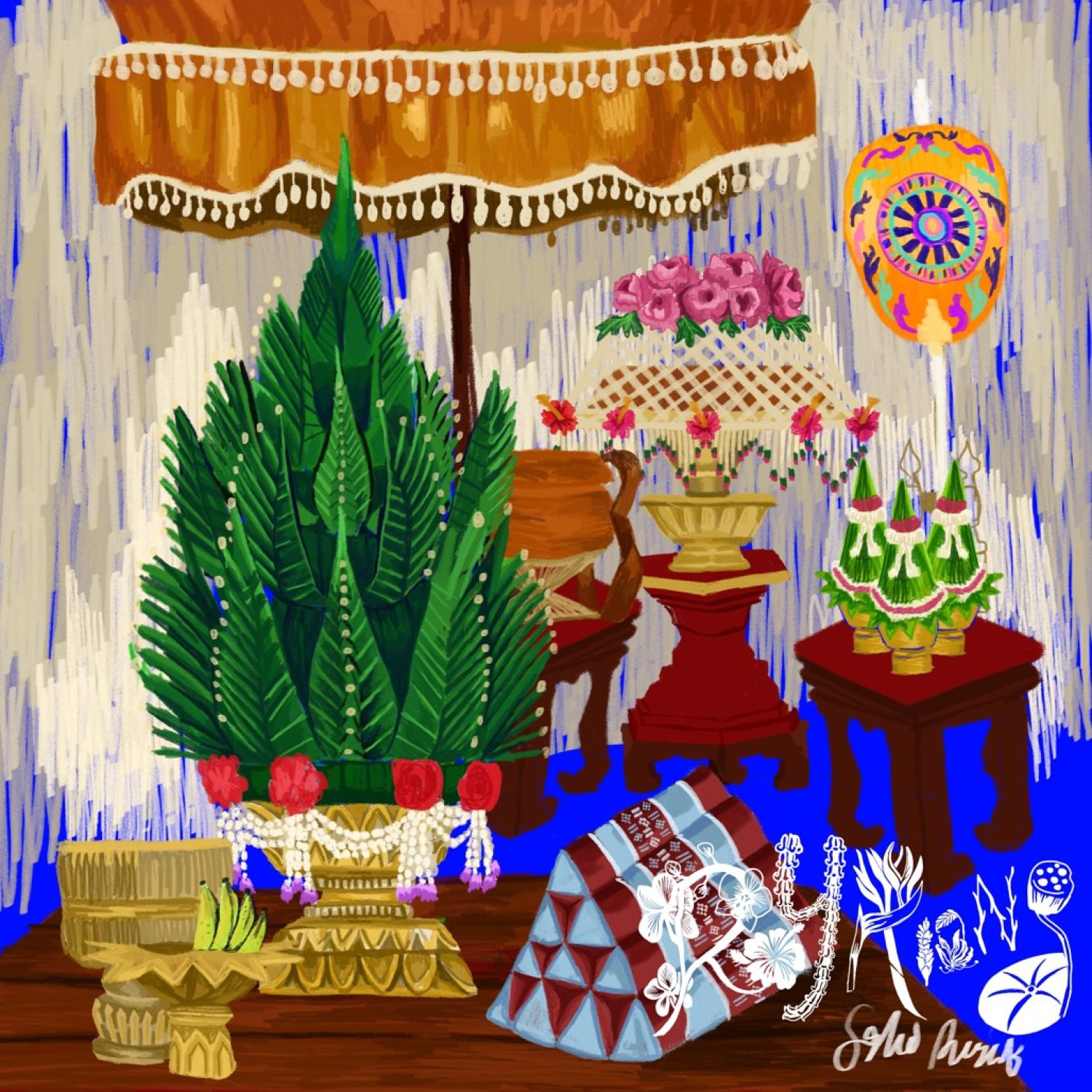
Royriang: To-be-a-monk-kit

Before Songkran officially begins tomorrow, I wanted to share something called a “to-be-a-monk kit.”

It’s not as common as it once was, but before going further, I should say this: I was baptized, raised in a Buddhist household, yet I don’t consider myself religious. If anything, I tend to question and critique more than I believe—I’d comfortably call myself agnostic.

Still, this “becoming a monk” tradition is something I grew up with very closely. My mother has always loved Buddhist ceremonies, and for the longest time, Songkran felt less like a holiday and more like a season where boys temporarily ordain as monks for their families.

As a child, I found it frustrating—wasteful, even. It often felt like an excuse for relatives to start drinking at 8 in the morning. In some ways, that irritation hasn’t completely faded. But over time, I’ve come to appreciate something else: the artistry behind it all.

Every element carries meaning.

The Christmas tree–like structure is called a บายศรี (Bai Sri), believed to serve as a channel to the unknown. This is where the soon-to-be monk sits with his parents and a ceremonial medium. The medium chants verses from the Tripitaka, speaking of virtue, the path of monkhood, and even the emotional tensions—like letting go of worldly attachments (yes, even girlfriends).

Then there’s the floral covering draped over the จีวร—the saffron robes worn by monks. There are also intricately folded banana leaf cones, used to hold candles that will later be offered at temples during the ordination period. Hours of embroidery. Hours of delicate banana leaf folding.

Even as a child, I found all of this quietly beautiful.

Today, though, traditions like this are slowly fading as the country moves forward and modernizes. This, in a way, is my small ode to something that shaped my childhood—something I may not fully believe in, but still deeply recognize.

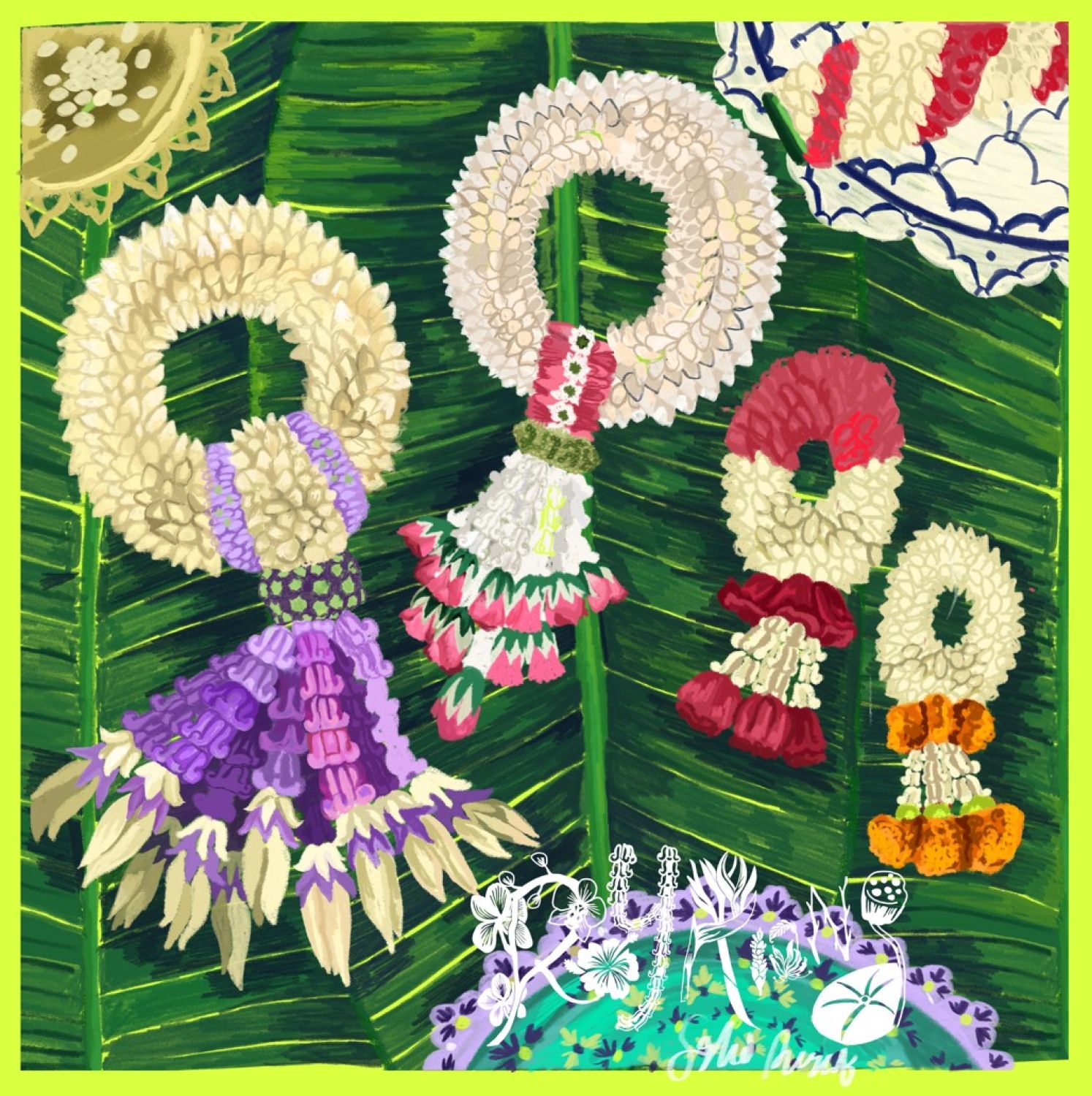
Royriang: Puangmalaii and its intricacies

l 5 National Television and has received immense positive response. It was a periodic soap opera dating back to the Ayutthaya period (late 16th century) in Bangkok, Thailand.

If Malaii is the flower ensemble then, Sam means the number 3 in Thai language and the story uses the flower garland as a name and metaphor for the main character, La-oh-orn.
The story follows a scandalous aristocratic lady that married three times, all for love. A great symbolism of how she was the flower ensemble and the three husbands are the three tails of it. The main character, La-aoh-orn, knew that she was scandalous, that it was considered wrong, disgraceful and a dishonour to her family but she kept her head up high because at the end of the day, respect is not something you can command and self respect is not something that needs to be justified. She never did anything or felt the need to explain the reason behind her doing things.

My mum loved the series so much. She never talked to anyone how much she loved the series but I can see it in her eyes. She never missed an episode and had also watched it on pirate websites when the series ended.

Did my mum see herself in La-aoh-orn?

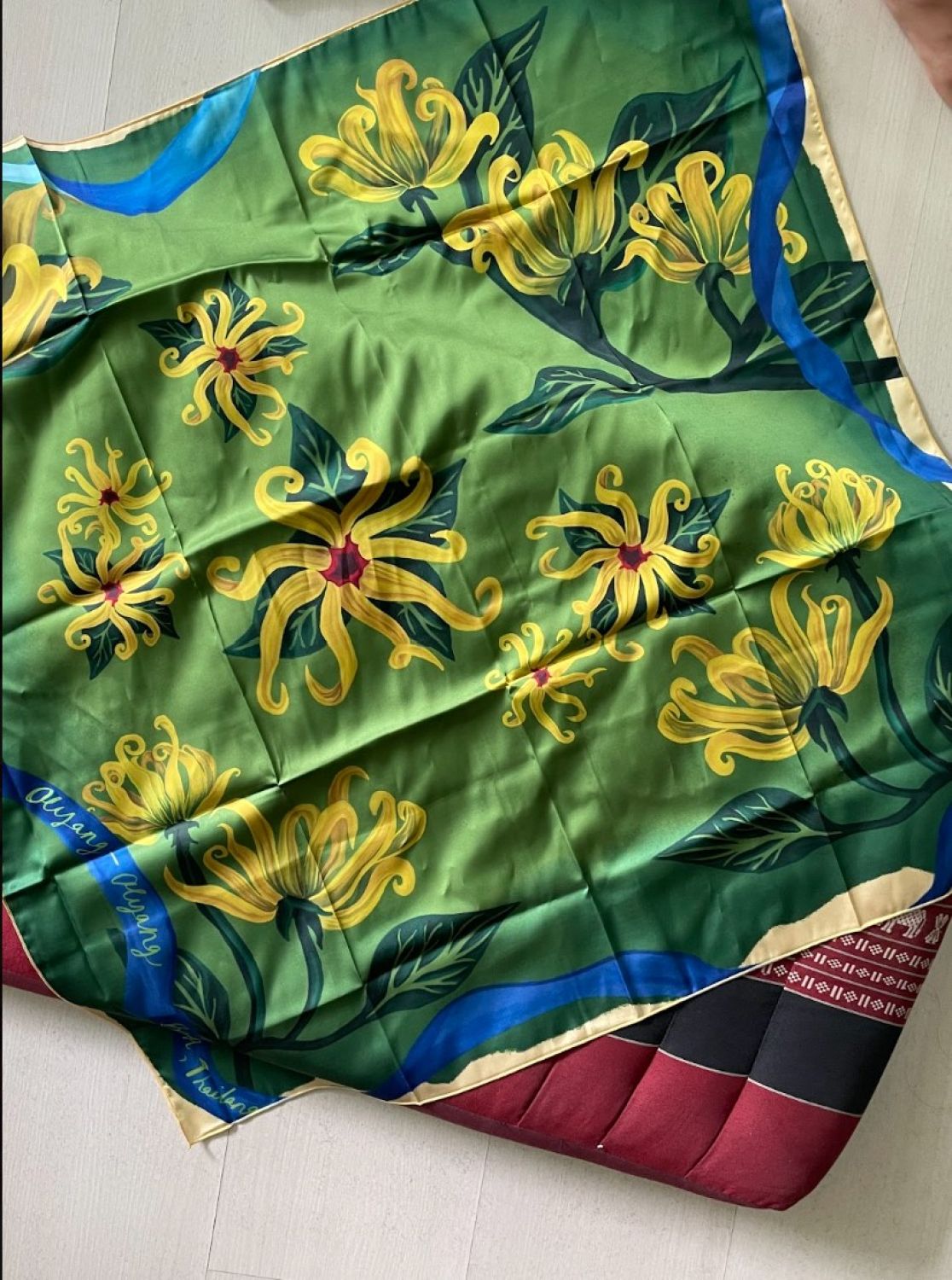
Foulard de Thailandaise no.0001

75x75 Silk Satin
A silk scarf series is inspired by Thai florals (ดอกไม้ริมทาง). In the first one, I had picked our Ylang-Ylang as our hero. Mostly because her shape is ambiguous, she could be anything and a flower might not be the first thing that comes into mind when one sees the shape of the gracious Ylang-Ylang. I had chosen to call it 'Foulard de Thailandaise', because of silk scarf's association with the fashion scene in France and because I have a strong relationship with France.

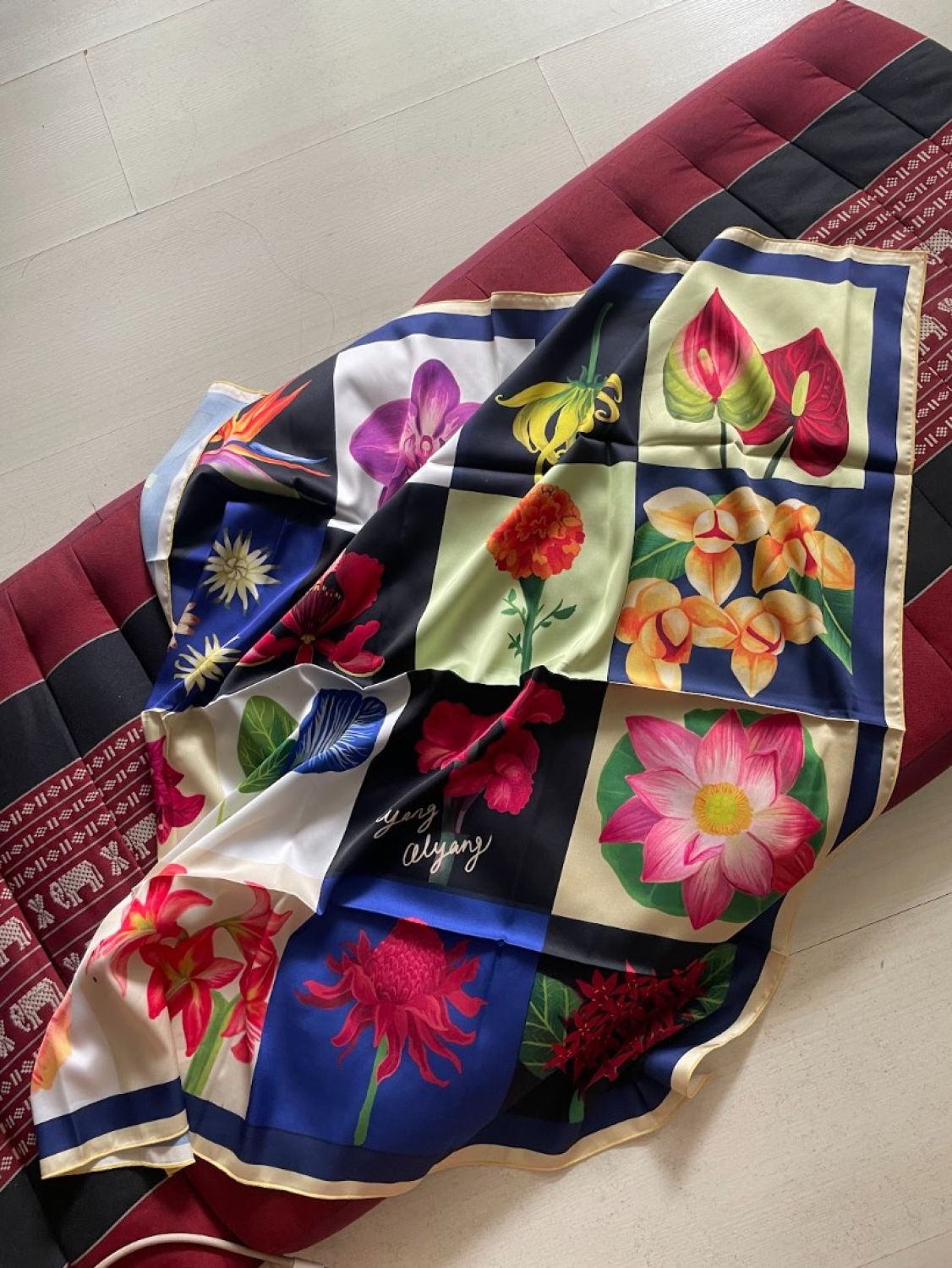
Foulard de Thailandaise no.0002

75x75 Silk Satin
A silk scarf series is inspired by Thai florals (ดอกไม้ริมทาง). In this second one, it is a great selection of the wonders of Thai Botanicals. These flowers are what you would see growing up in Thailand anywhere. From the corner of the streets straight into the vase for religious ceremonies. They are very special in shape and flowers. Unique in fragrance and a lot of the time, it has been looked over and might not appear as cherished as the mighty English rose and Holland's charming tulip. They are humble and sweet in their own way and I enjoy drawing them as well as wearing them on my skin.

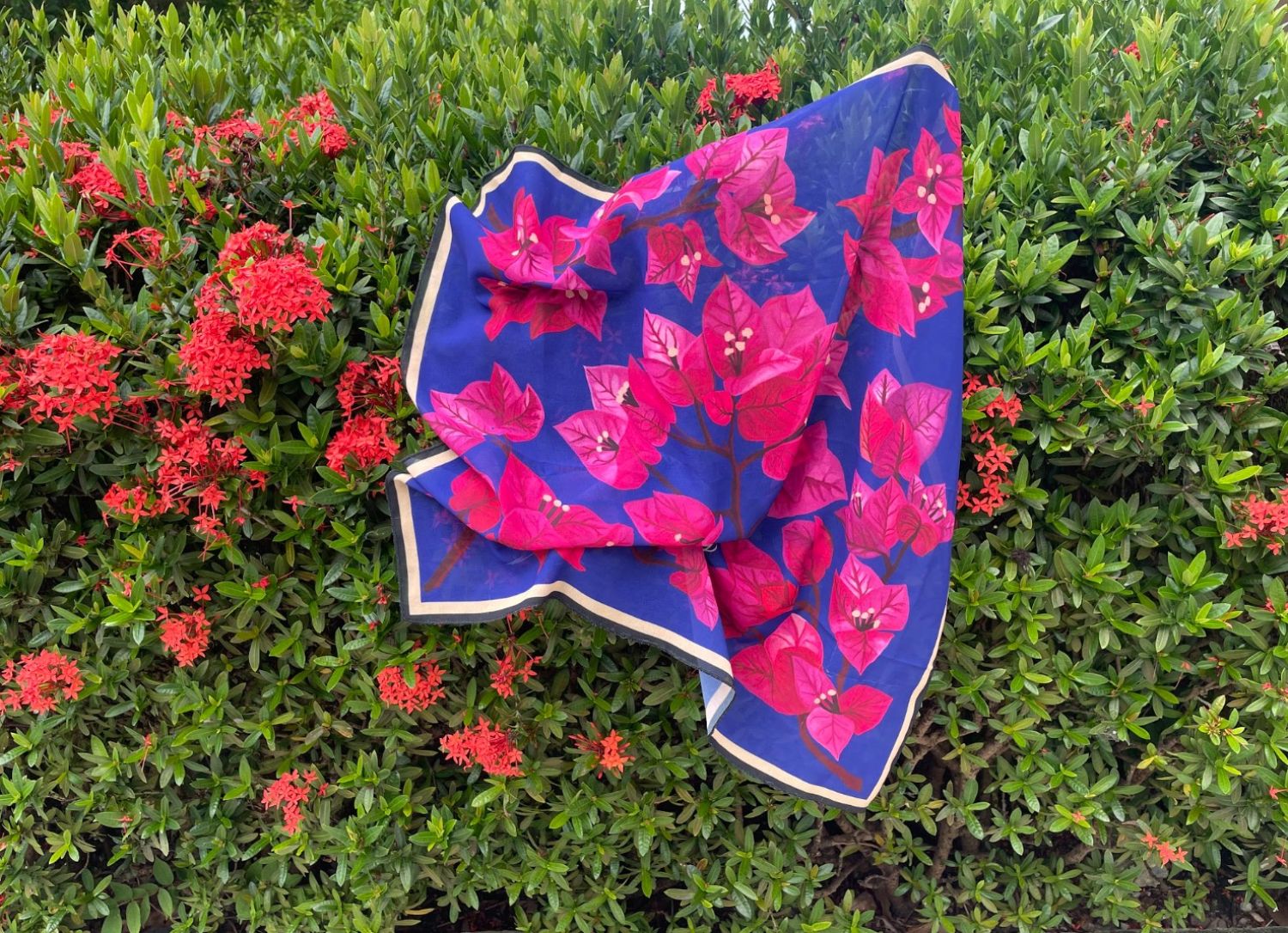
Foulard de Thailandaise no.0003

75x75 Silk Satin
The Bougainvillaea sprang right out of the wall of my neighbour's house. It comes through the crevices and blooms proudly in its iconic magenta, known to them and them only. I have a very strong connection with bougainvillaea in the sense that if you investigate the flower closely, they look just like its leaves, and because of this, if I had to pick a flower to represent myself, it would be the bougainvillea everyday. She blends in, but she is not afraid to stand out. The Thai name for Bougainvillaea is "เฟื่องฟ้า". The literal translation means, "as great as the sky."