SHOWCASE

/ ARTIST / 2026

ARTIST: Lenta
COUNTRY: Thailand
CONTACT: https://www.facebook.com/share/1FJsWCXjxs/
https://www.instagram.com/lenta_journey?igsh=MXVsaW1pMGJsY3FhaA==
https://www.pixiv.net/users/88941914
An illustrator inspired by the deep blue ocean and its creatures, bringing the wonder of childhood imagination to life through illustration.

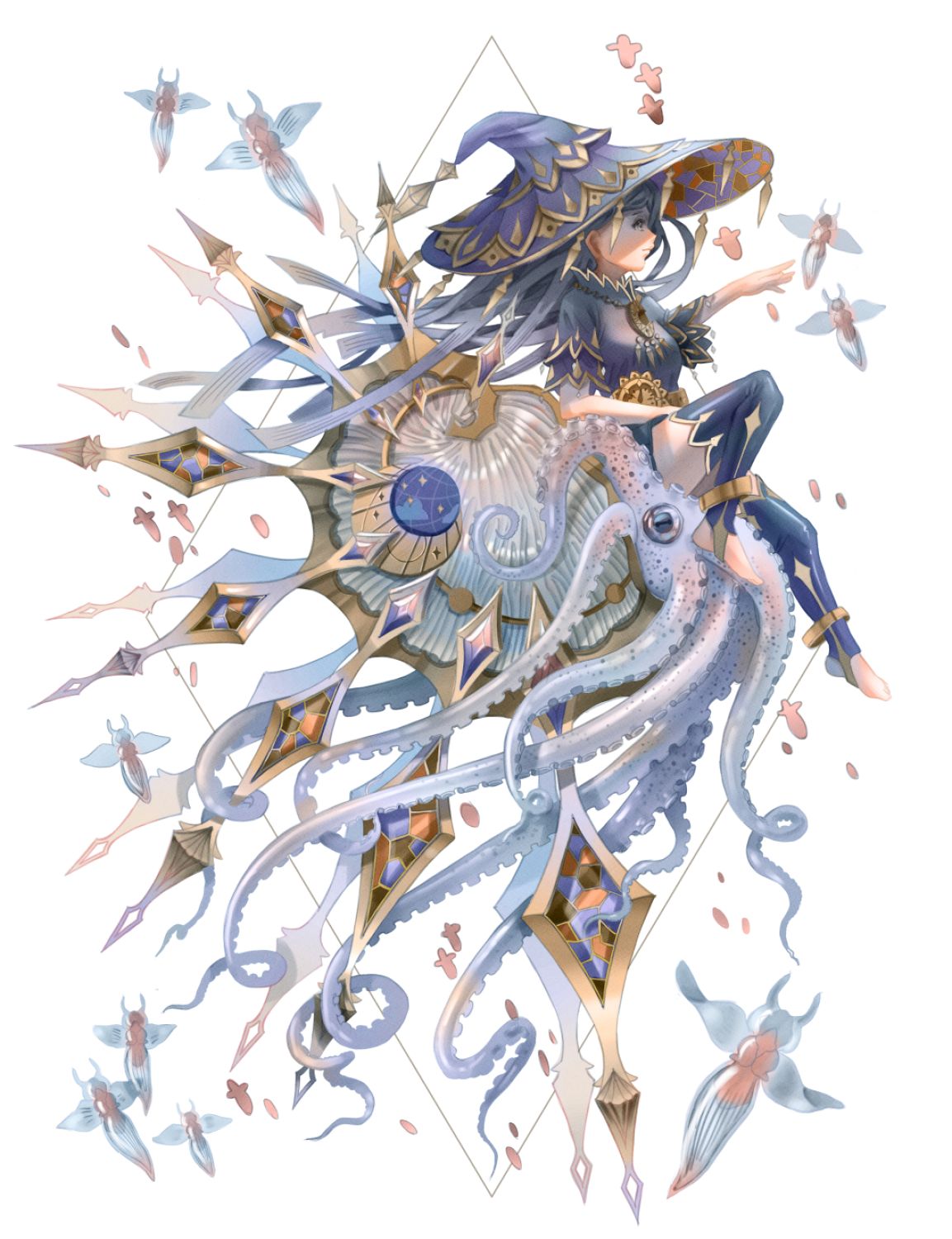
Cirryne, Witch of the Thorn Sea

When I was a child, my father had business trips to Japan. Whenever he came home, he would always bring back little gifts for me soft vinyl kaiju figures, LEGO sets, and all kinds of toys.

One day, however, he handed me something different. It was carefully wrapped in paper and cushioned with a layer of cotton. As I slowly unfolded it, I found a delicate white seashell inside. It was as thin as paper, with gentle ripples across its surface, resembling patterns left in the sand by the wind.

That was the first time I encountered a Paper Nautilus.
Years later, I was captivated once again when I came across photographs of a living Paper Nautilus in a foreign marine life book. It was then that I learned the fragile shell was actually home to an octopus.

It remains one of those small but unforgettable childhood memories, one that quietly nurtured my fascination with the ocean and still holds a special place in my heart.
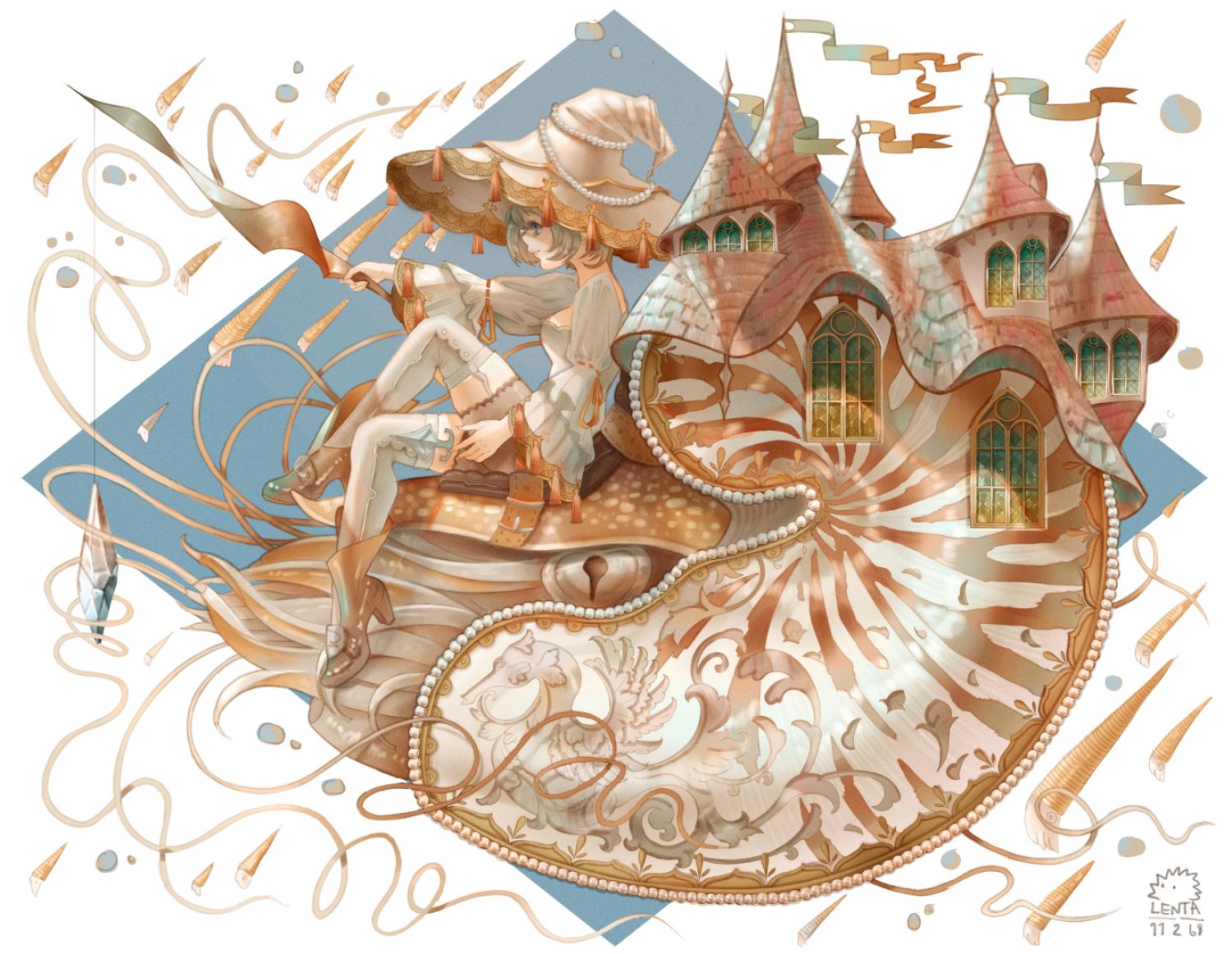
The Floating House of Niley

When I was a kid, back when many child was fascinated by dinosaurs, my family assumed I would be too. So our house ended up with quite a few dinosaur encyclopedias.

Ironically, my favorite pages weren't about dinosaurs at all. I kept coming back to the pages about nautiluses and other strange prehistoric sea creatures. There was just something fascinating about them.

The nautilus, a creature that has dominates the sea for over 400 million years, has always captured my imagination. Even though its heyday has long gone, it is still fascinating today.

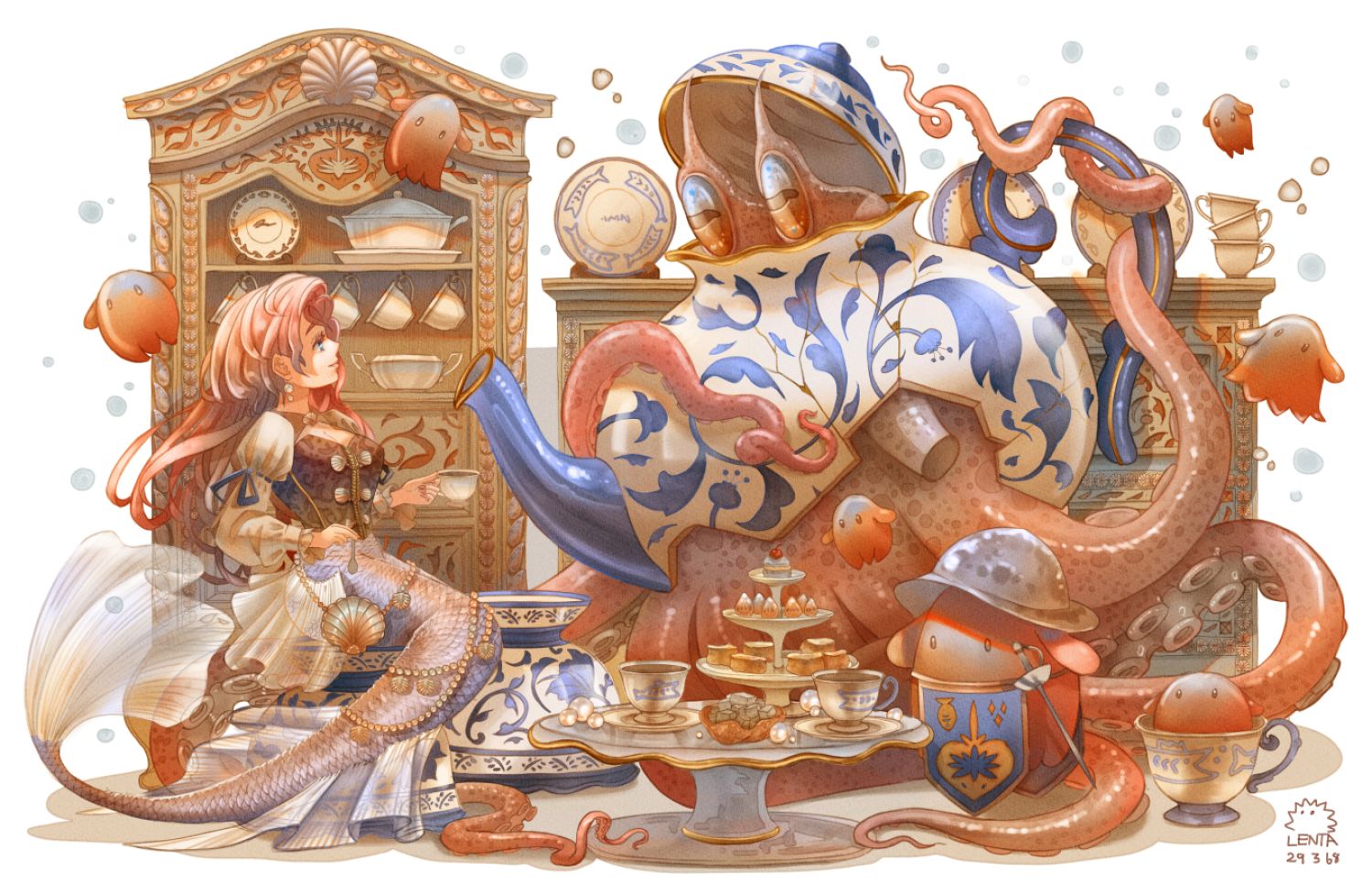
Kraken's Tea Party

I once watched local fishermen hauling up baskets filled with strings of conch shells tied together in long lines. It wasn't until later that I learned these empty shells were actually used to catch small octopuses.

Whenever an octopus discovers an abandoned shell, it instinctively claims it as a shelter. But when the shells are pulled back up from the sea, instead of escaping, the octopus retreats even deeper inside, clinging to what it believes to be safe.
For many of them, it becomes their final refuge.

Thinking about that always sparks my imagination. If these little octopuses were part of a merfolk society, I'm sure they would choose their homes with great care, perhaps a finely glazed teapot, an elegant porcelain vessel, or an even more beautiful shell worthy of calling home.

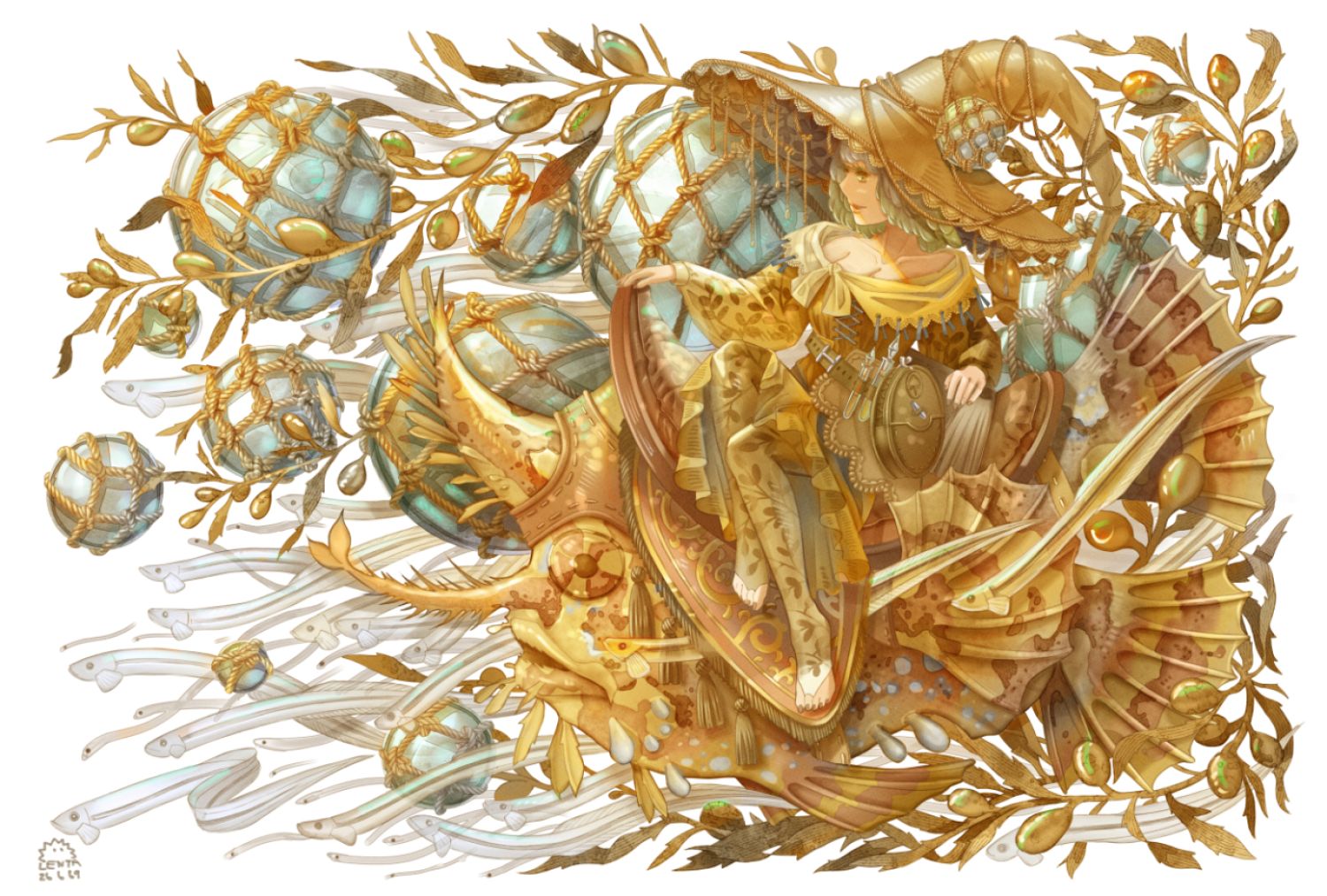
Sagazzi of the Eel Garden

The Sargasso Sea is a unique part of the Atlantic Ocean with no coastline, famous for its floating golden sargassum seaweed.

When I was a kid, I first learned about it from an illustrated children's encyclopedia. It felt like such a beautiful and mysterious place. The star of that book was the Sargassum frogfish, and ever since then, I've wanted to draw one someday.

More recently, I learned that both the European eels and the American eels use the Sargasso Sea as their spawning ground. Much like salmons returning upstream to lay their eggs, these eels leave freshwater and travel more than 5,000 kilometers across the ocean to return to their birthplace. That's why I also wanted to include glass eels the transparent juvenile stage of these two species in this illustration.

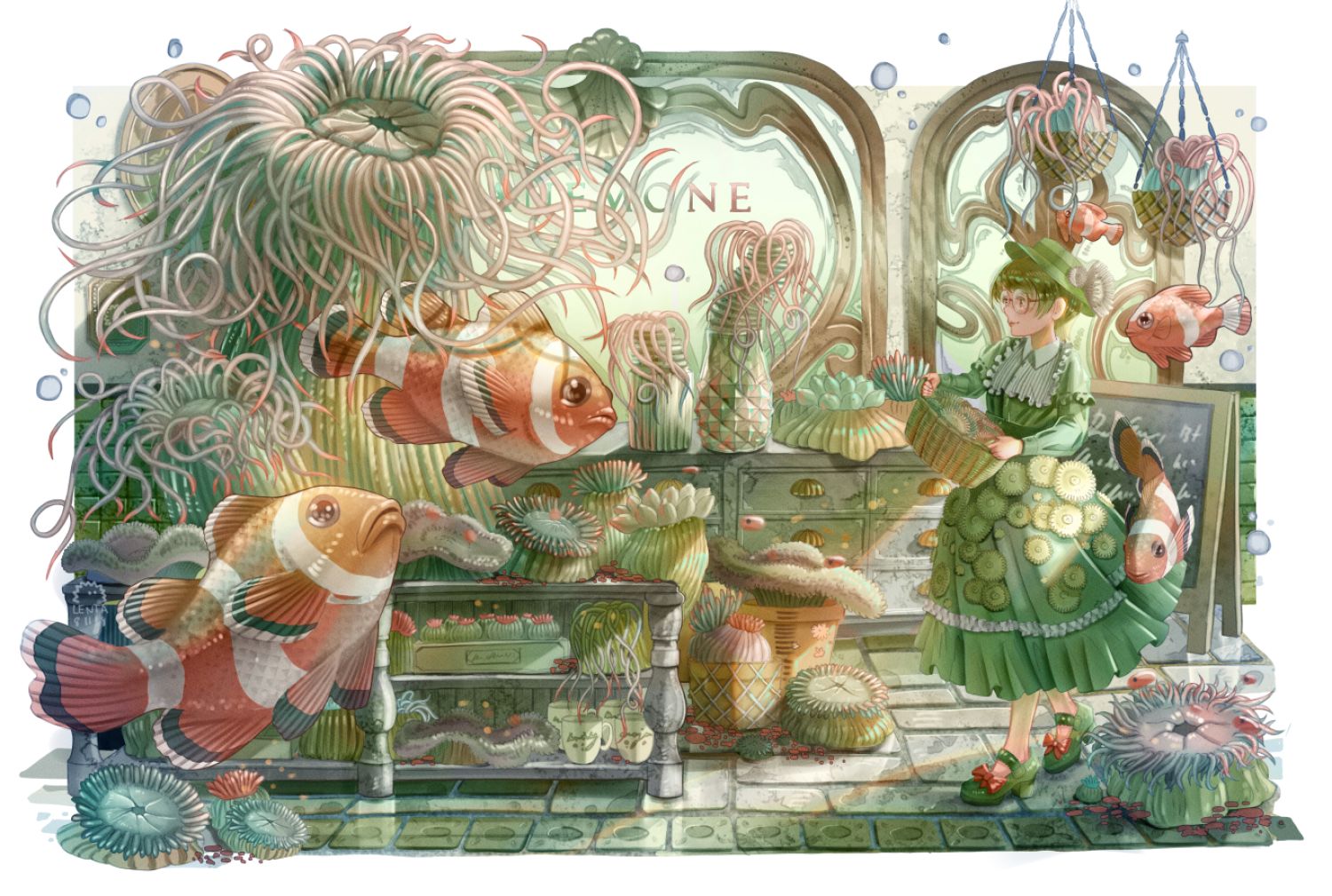
Breeder of Flower

I used to call this fish "the orange-and-white striped clownfish" all the time. Until I heard my nieces and nephews calling it "Nemo", I realized how remarkable it is that a single movie could completely reshape the way so many people recognize an animal.

Unfortunately, here in Thailand, when someone says "Dory," most people are probably more likely to think of the inexpensive white-fleshed freshwater fish than the forgetful little blue tang from the movie.

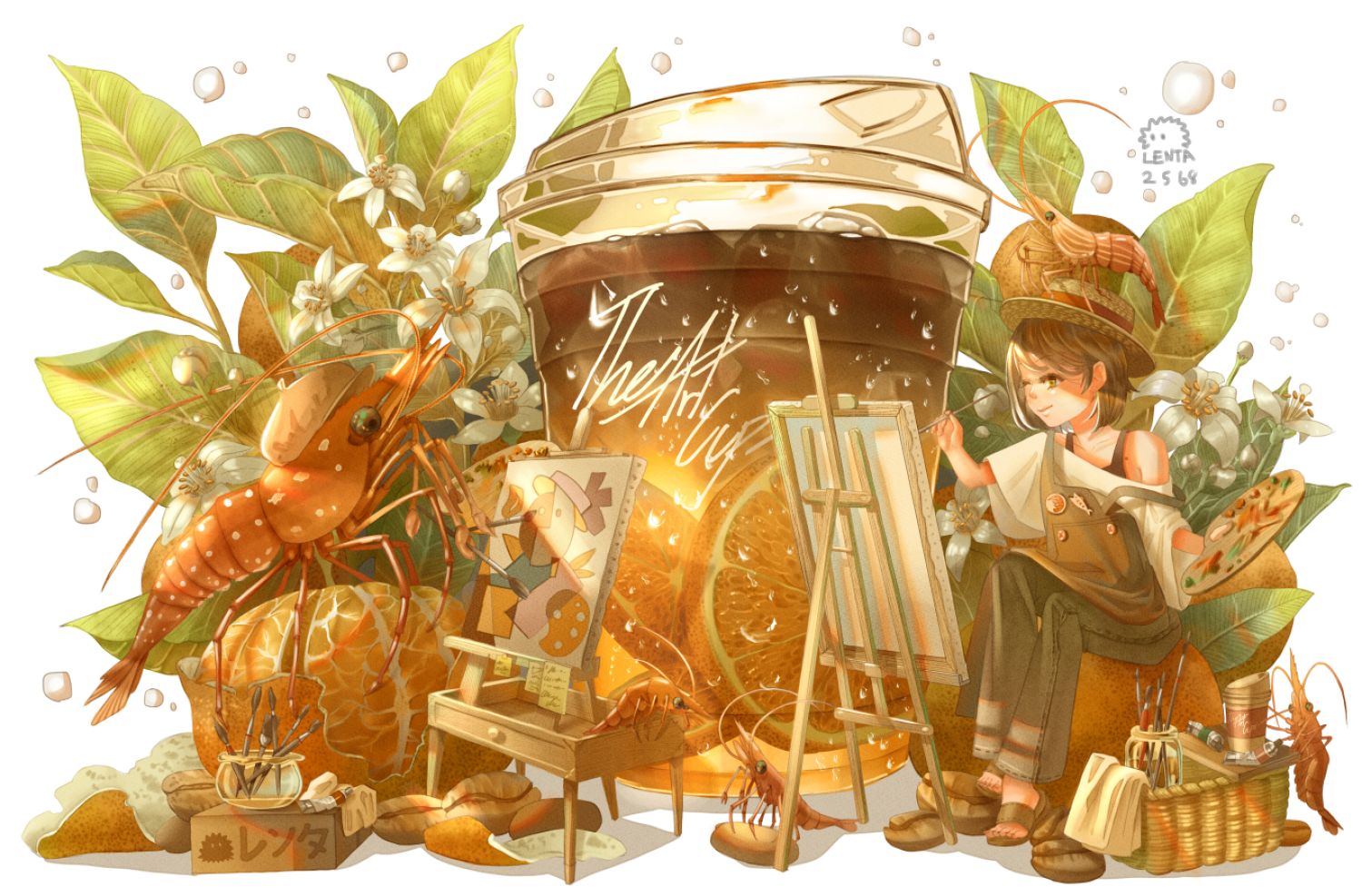
Caffeine & Tangerine

My first cup of coffee was probably when I was around twelve or thirteen. It was a traditional Thai coffee from a local market—brewed unbelievably sweet, poured into a plastic bag packed so tightly with ice that it bulged like a water balloon, then tied with a rubber band so you could carry it around.

I'm not sure if that was the moment I became a coffee person, Since then every cup somehow made me feel just a little more grown-up.

By the time I reached university, coffee had changed from a delicious treat into a mean of survival. Canned coffee became my companion through countless nights, helping me keep my eyes open as I worked on architectural drawings until dawn. It was simply part of student life.

When I started working, I gradually switched to black coffee. It became my way of staying alert, preparing myself for the constant pressure and stress that came with adult life. when I stuck with problems, simply brewing up a fresh cup, placing it beside me, and letting its aroma slowly fill the room often often enough to calm my mind and help me think a little more clearly.

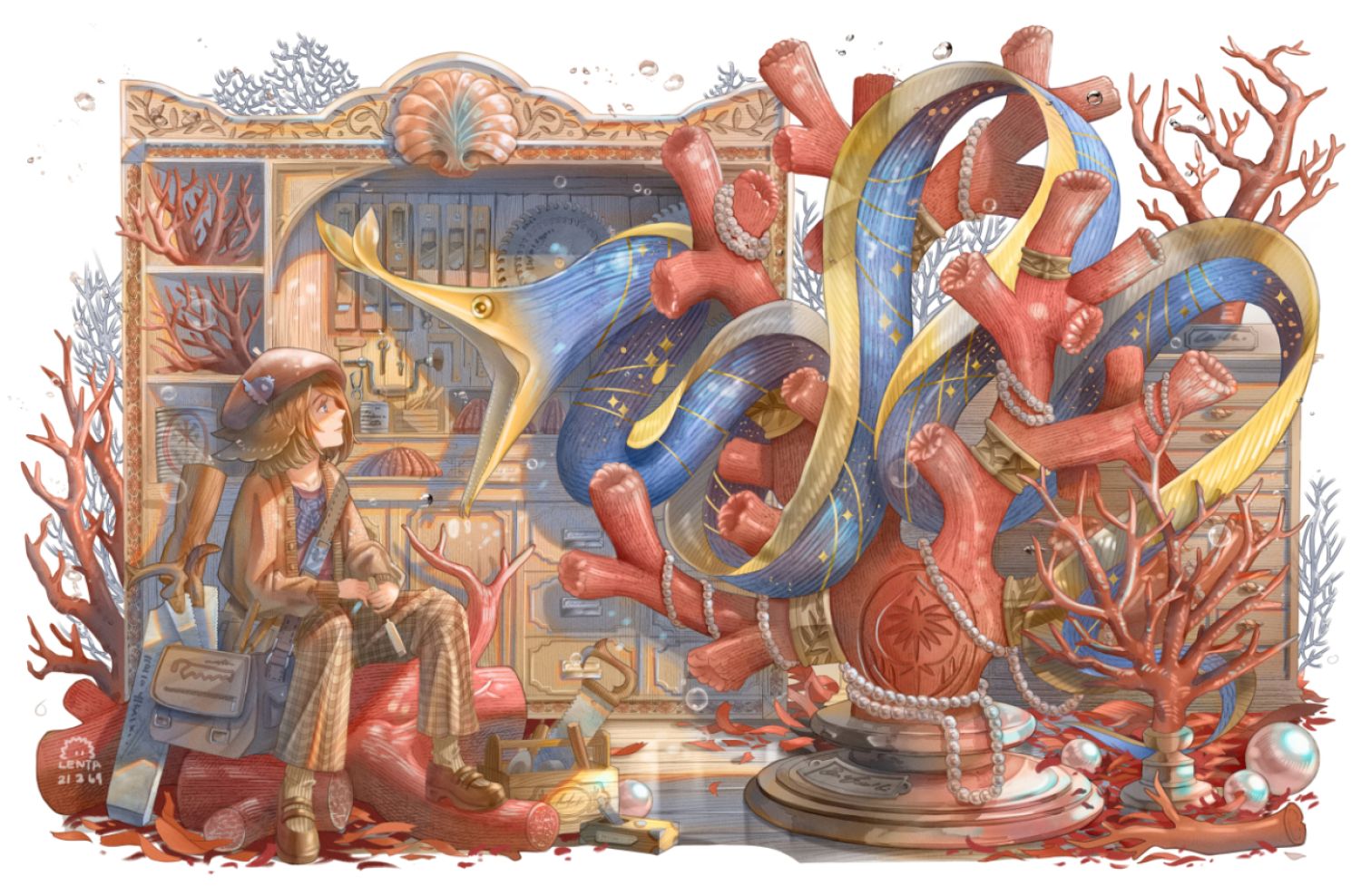
Red Coral & Cobalt blue

I used to think that the color name “Coral Red” came from gorgonian corals with their distinctive red lines. But not long ago, while I was searching for references of jewelry and ocean-themed props, I came across an image of a coral, similar to staghorn coral, polished to a glossy shine like crystal and displayed on a metal stand.

I discovered that the name “Coral Red” actually comes from this very species—the red coral (Corallium rubrum).

Red coral (Corallium rubrum) is a hard coral that lives at depths between 20 and 600 meters in the Mediterranean Sea. Because of its beautiful red color and its ability to be polished to a glossy finish, it has long been harvested for jewelry and decorations. As a result, it is now in a critically endangered state.

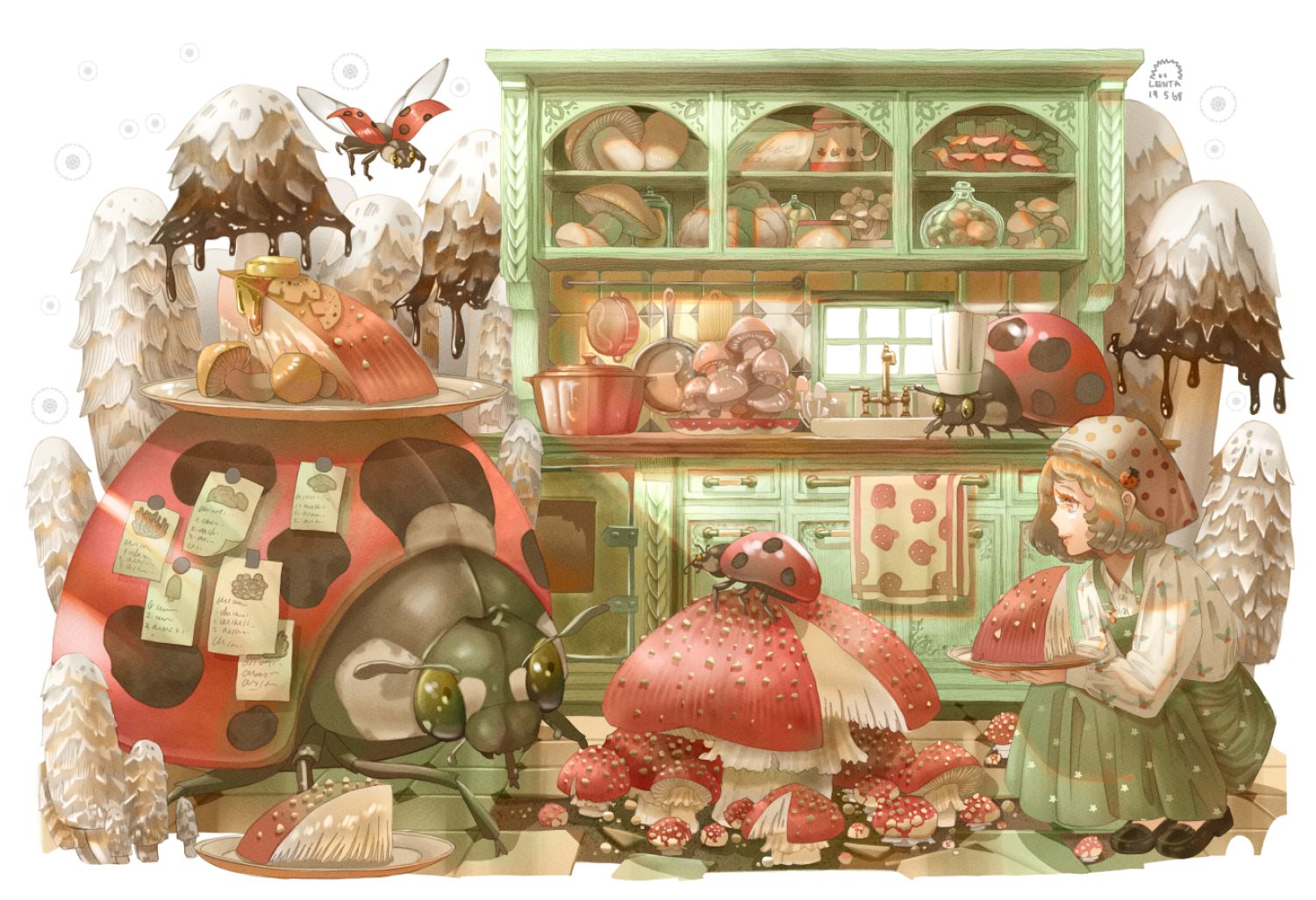
Lady (Bug) and Amanita

Ever since I was a child, whenever I saw illustrations of mushrooms, they were almost always the same iconic one—a bright red mushroom covered with little white spots. It looked so charming and whimsical that it became my mental image of what a mushroom should look like, and it was the one I always tried to draw during childhood.

A few years later, my father bought me an mushrooms encyclopedia. I couldn't read English at the time, but the book used a simple system of symbols that made it easy to tell which mushrooms were edible and which were not.

The most delicious edible mushrooms were marked with a plate accompanied by a knife and fork. Mushrooms that were edible but not particularly prized were shown with a plate crossed by a knife and fork. Poisonous mushrooms, on the other hand, were marked with a plate bearing a bright red skull symbol.

And that adorable little red mushroom with white spots—the one I had always thought of as the quintessential fairy-tale mushroom—was right there in the last category.

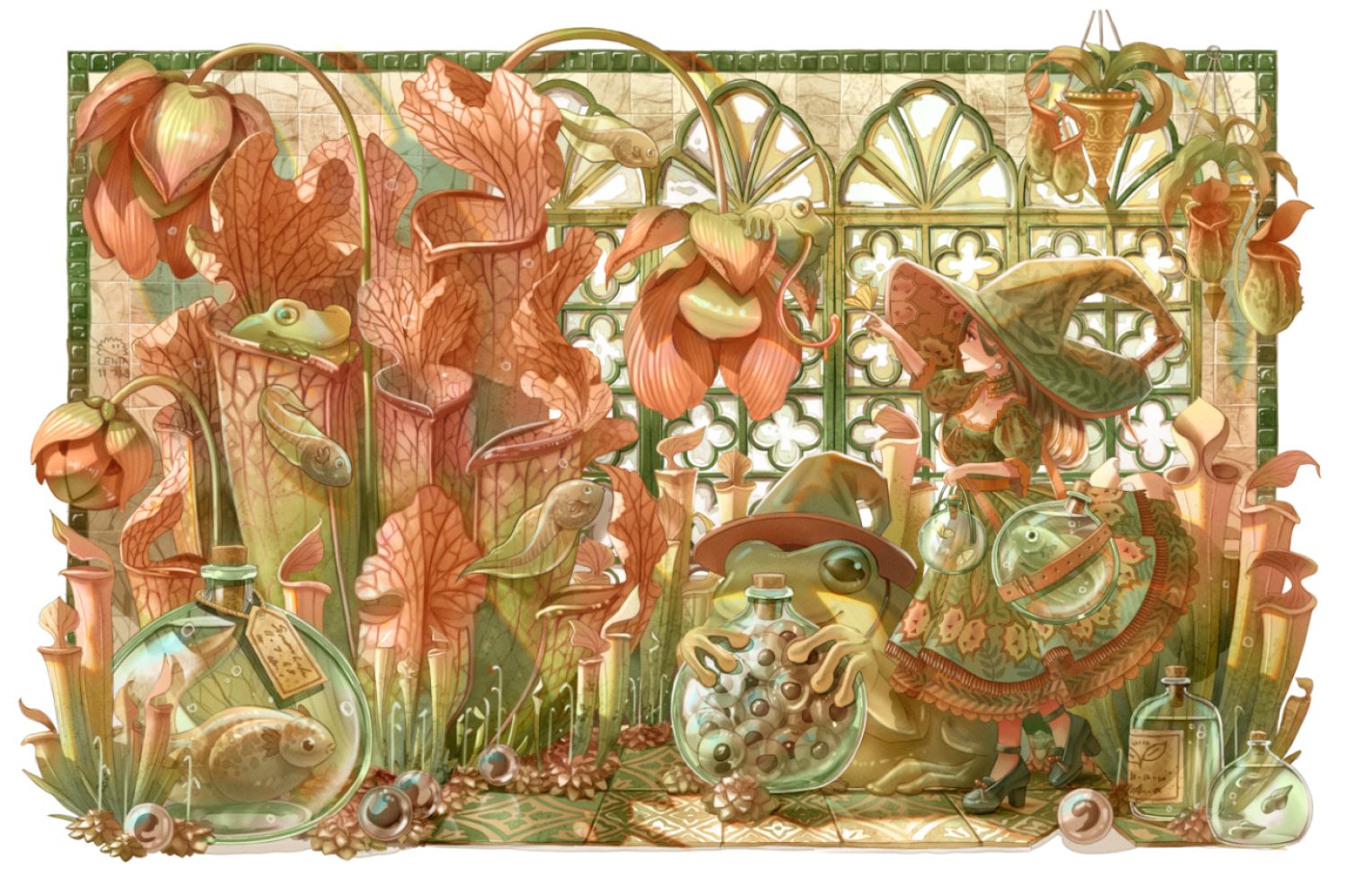
Nursery of the carnivores

Carnivorous plants have always fascinated me. Like most angiosperms, they still rely on insects for pollination, yet they also depend on insects as a source of nutrients.

Sarracenia, in particular, is especially intriguing. Its flowers are every bit as beautiful as its elegant pitcher traps. It almost makes me wonder? does that mean an insect that happens to wander by has a fifty-fifty chance? It might leave carrying pollen or end up becoming lunch instead

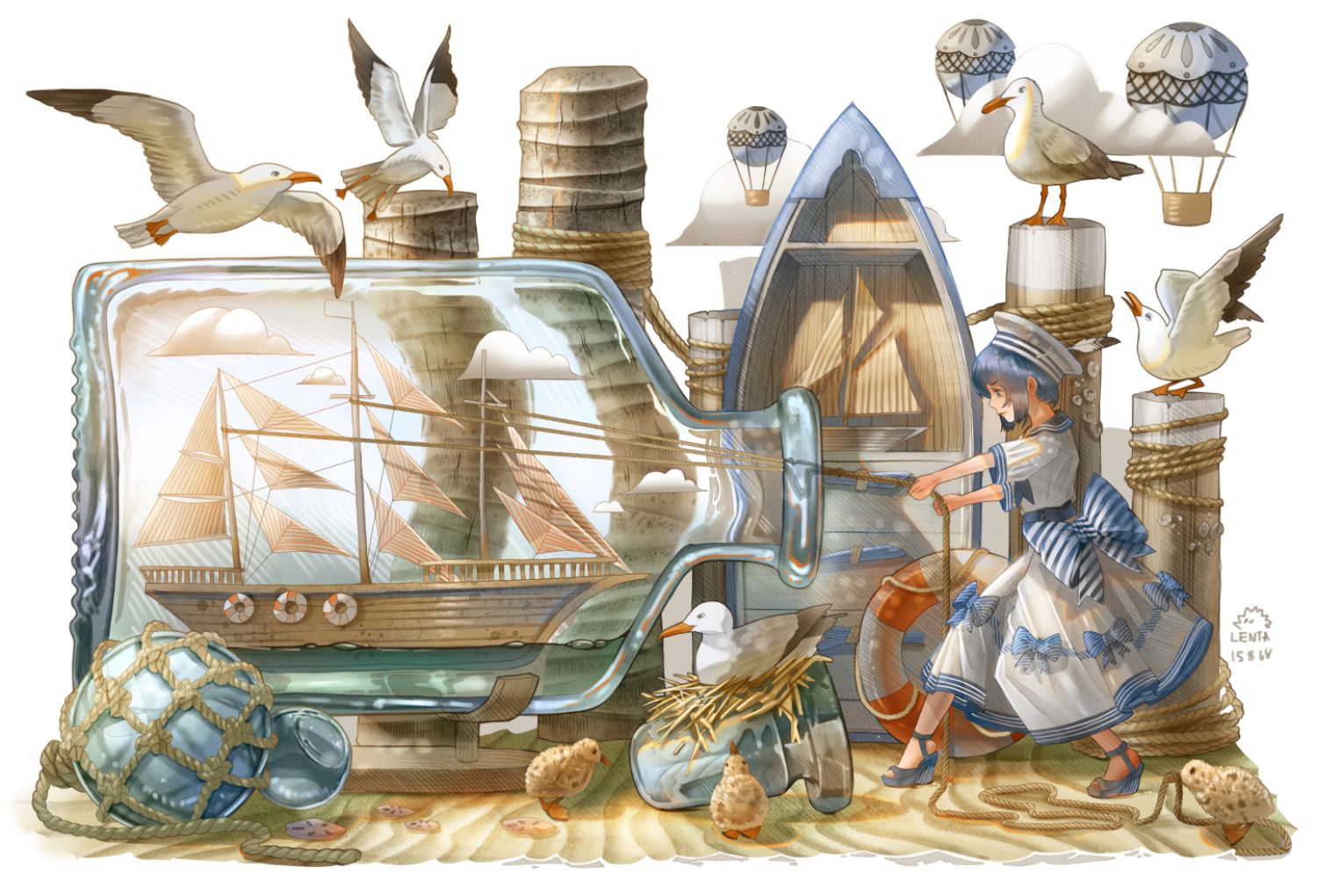
The sailor and her ship in a bottle

When I was a child, whenever my family took me for a road trip, there were only a handful of songs playing in the car. We listened to a few cassette tapes, the same songs would be played over and over again.

One of my favorites was a song about a seagull, flying determinedly toward a distant destination, even though it couldn't yet see where its journey would end.

As a child, I loved the song simply because of its beautiful melody and rhythm. But now, after experiencing a little more of life, I find myself understanding the message the songwriter wanted to share far more deeply than I ever did back then.