SHOWCASE

/ ARTIST / 2026

ARTIST: TheGroxury沙塵百貨
COUNTRY: China
CONTACT: https://hk.pinkoi.com/store/thegroxury
instagram.com/thegroxury
The Groxury 沙塵百貨 is an independent creative brand that takes the Cantonese language as both subject and source. Its name is a homophonic transformation of the Cantonese slang “沙塵白霍”, a phrase layered with pride, personality, and cultural nuance.
As Cantonese faces increasing marginalization, the brand brings the language into contemporary visual culture through illustration and design products, reaching beyond words.

Moving between colloquial expressions and fading vernacular, The Groxury 沙塵百貨 explores how language connects with memory and identity. Through creation, it invites people to reconnect with the native tongue while reimagining its presence in the present.

TheGroxury沙塵百貨-Dong Zou Maa Git:Pun Tong Five Seasonal Vegetables

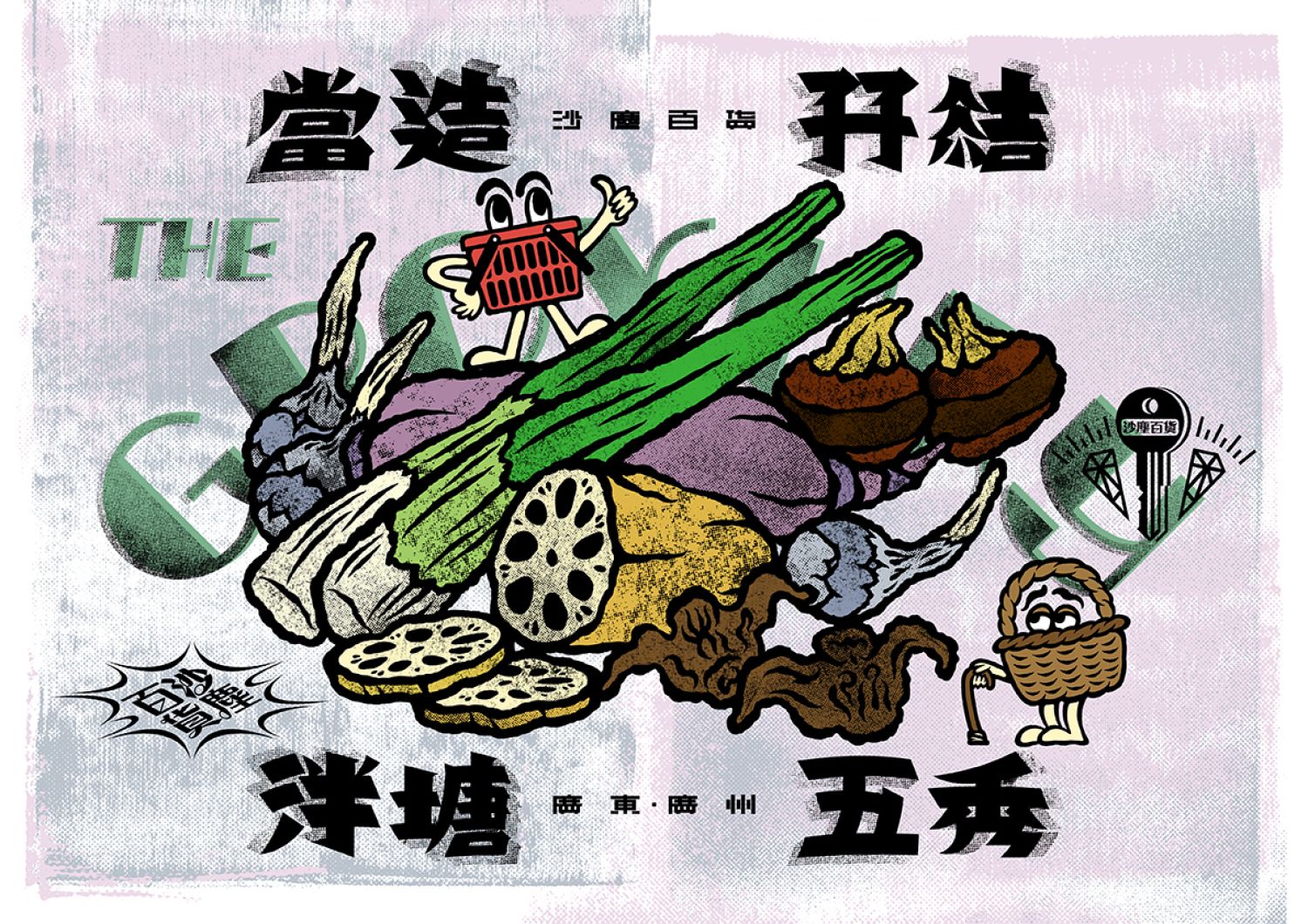
當造孖結 (dong zou maa git) is a fictional grocery market whose name blends dong zou (“in season”) with maa git, a Cantonese phonetic rendering of the English word “market,” historically common in North American Chinatowns.

As I worked on this piece, I visited five existing grocery markets in San Francisco’s Chinatown bearing the name maa git. At New Louie's Inc. (新雷氏孖結), the owner, whose family traces its roots to Toishan, Guangdong, shared that maa git was already common when she immigrated in the 1980s. I believe its origins likely go further back and may reflect Toishan / Hoisan, Hoiping, or Guangfu Cantonese. More than a translation, it carries the lived language of migration.

The illustration brings together the “pun tong ng sau” (泮塘五秀, Pun Tong Five Seasonal Vegetables): lotus root, water chestnut, water caltrop, wild rice stem, and arrowhead, historically cultivated in Canton (Guangzhou), and reimagines them in this diasporic market setting. Bringing ingredients from one’s homeland across borders is a continuation of culinary habits and sustains cultural identity. Only wild rice stem cannot be imported into the United States; the others remain available in neighborhood maa git markets.

Both maa git and the Pun Tong Five Seasonal Vegetables embody Cantonese heritage. Today, stores named maa git are increasingly rare in Chinatowns, and Pun Tung in Canton (Guangzhou) no longer grows these five aquatic plants.
TheGroxury沙塵百貨-Fictional Ad:Ho Tsu Hing Tiles

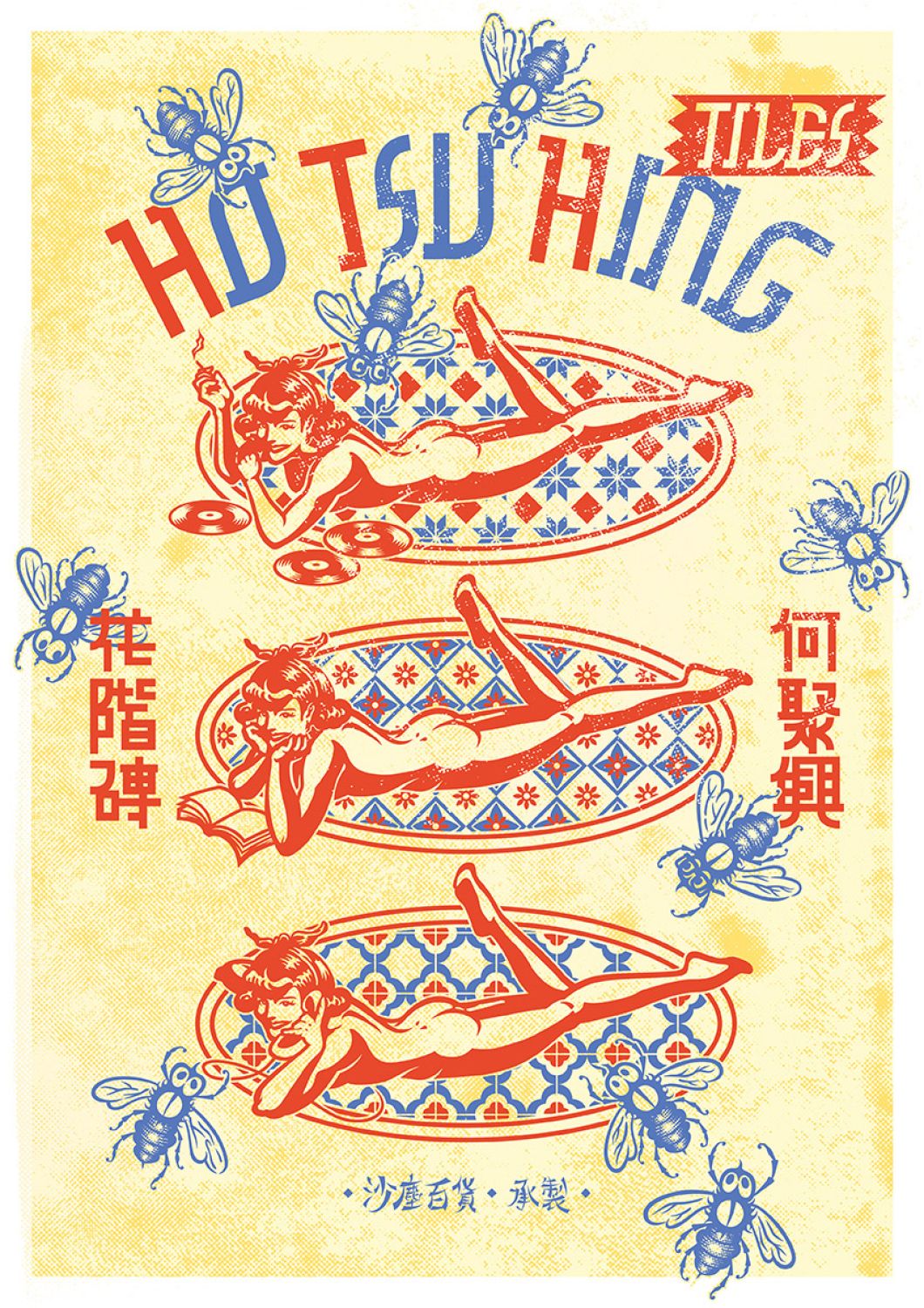
Cement pattern tiles have been part of everyday life and culture in Guangdong for over a century.

Originating in 19th-century Europe, they traveled from Britain to Southeast Asia and were later brought back to China by overseas Chinese communities. By the late Qing dynasty, several factories had opened across Canton (Guangzhou).

From the early 1900s to the 1940s, returning overseas Chinese invested in houses across Guangdong, making cement pattern tiles a popular choice that reflected folk culture, taste, and modern living. Some were designed and produced locally, others imported.

I came across an old advertising photograph from the Ho Tsu Hing Cement Pattern Tile Factory, once based in Canton. Using it as a reference, I recreated it as a fictional advertising poster illustration, my way of giving a long-gone local brand a second life, letting it live on, if only in memory.

TheGroxury沙塵百貨-A Bittersweet Meal

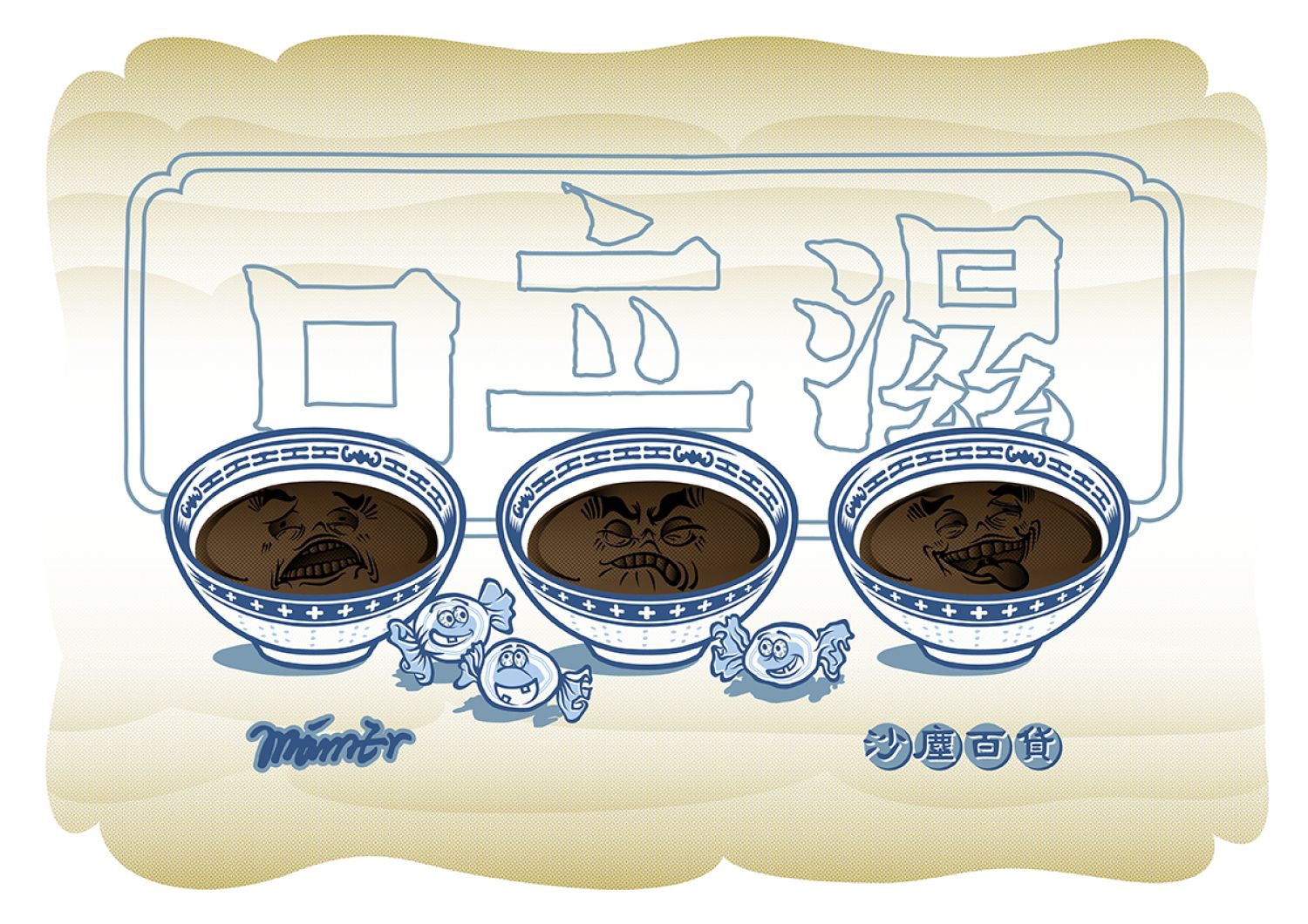
Seeing the jar of preserved plums was never a good sign, it usually meant your mom was about to make you drink “Twenty-Four Flavors,” a potent Cantonese herbal tea blend.

Back in the day, clever kids would try every trick to dodge the broom-wielding mom, but once you saw your own bitter face reflected in that dark herbal tea, you knew your fate was sealed.

After all, snacks like preserved plums taste better with a side of herbal tea. Together they made the perfect combo,a bittersweet meal that still lingers in our everyday memories.

The term 口立濕(hau lap sap)means “snacks” in Cantonese.

TheGroxury沙塵百貨-Tiger Head battery:Vintage Voltage

Back in the day, our homes were full of little battery-powered gadgets,remote-controlled cars, radios, flashlights, and more. Every time we popped in fresh batteries and watched them come to life again, it felt like just another ordinary moment. Little did we know, those tiny sparks of power were quietly lighting up so many moments in daily life.

Among old daily-use goods in Canton (Guangzhou), I selected graphic elements from a vintage 555 battery casing and paired them with graphics from the Tiger Head battery packaging, made by Guangzhou Yanguang Battery Factory in 1928. I redrew them as this illustration, nodding to that history and bringing past and present together.

TheGroxury沙塵百貨-Flip on the Five Cantonese Profanity Puns

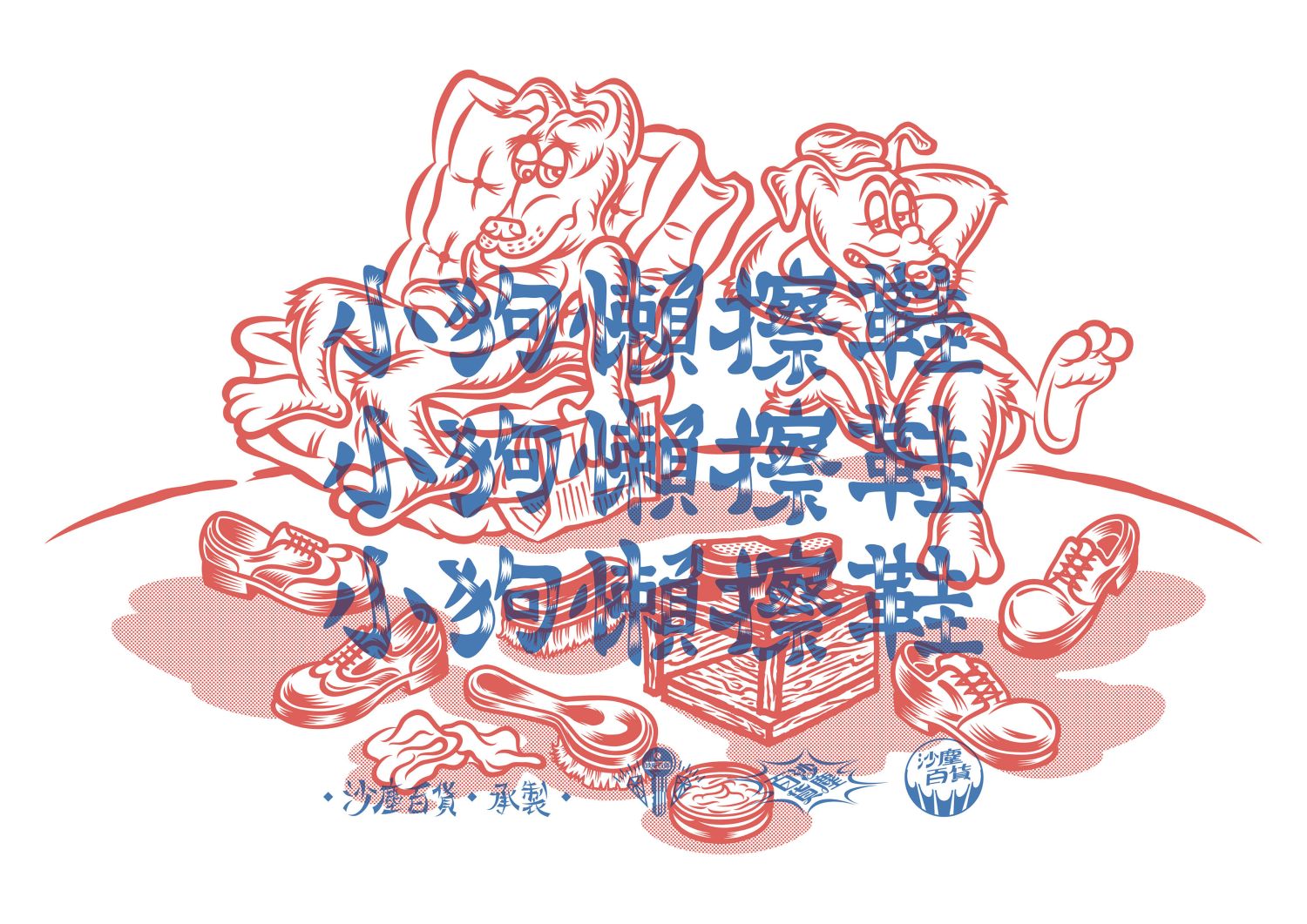
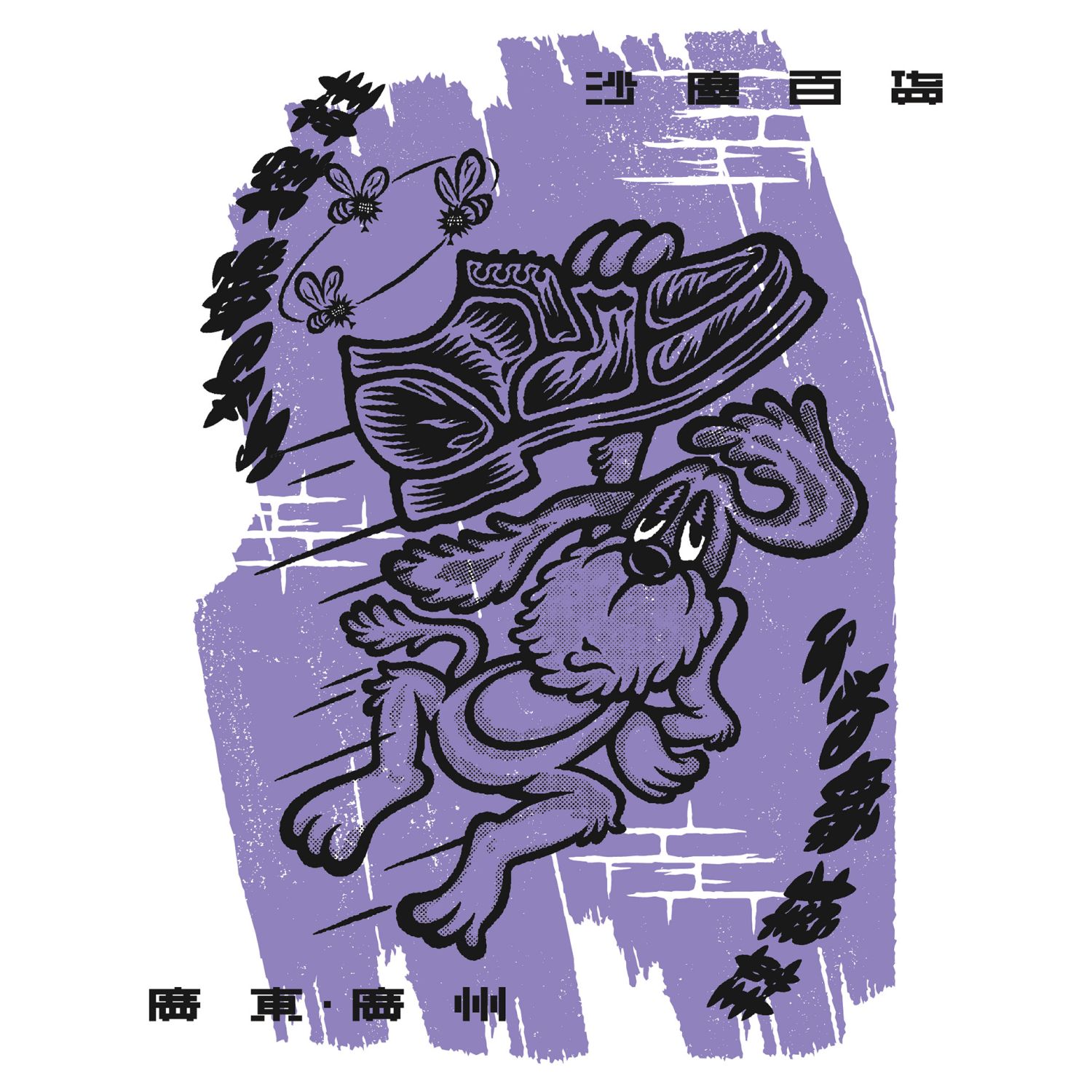
This illustration draws inspiration from Lazy Dog Polishes No Shoes by Hong Kong author Jimmy Pang Chi-ming, a witty and insightful exploration of Cantonese profanity and its cultural layers. The book’s title cleverly uses sound-alike words to turn five profane Chinese characters into the harmless-sounding phrase Lazy Dog Polishes No Shoes (小狗懶擦鞋), letting something rude pass as something ordinary and almost childlike.

Over time, locals have played similar tricks with language, reshaping these expressions into coded forms such as “diu,” “9,” “L,” “7,” and “hi,” blending rebellion, wit, and emotional nuance.

Together, the book and this artwork celebrate the creativity and identity woven into everyday Cantonese speech.

TheGroxury沙塵百貨-Flip on the Five Cantonese Profanity Puns 2.1

This illustration draws inspiration from Lazy Dog Polishes No Shoes by Hong Kong author Jimmy Pang Chi-ming, a witty and insightful exploration of Cantonese profanity and its cultural layers. The book’s title cleverly uses sound-alike words to turn five profane Chinese characters into the harmless-sounding phrase Lazy Dog Polishes No Shoes (小狗懶擦鞋), letting something rude pass as something ordinary and almost childlike.

Over time, locals have played similar tricks with language, reshaping these expressions into coded forms such as “diu,” “9,” “L,” “7,” and “hi,” blending rebellion, wit, and emotional nuance.

Together, the book and this artwork celebrate the creativity and identity woven into everyday Cantonese speech.

TheGroxury沙塵百貨-Flip on the Five Cantonese Profanity Puns 2.2

This illustration draws inspiration from Lazy Dog Polishes No Shoes by Hong Kong author Jimmy Pang Chi-ming, a witty and insightful exploration of Cantonese profanity and its cultural layers. The book’s title cleverly uses sound-alike words to turn five profane Chinese characters into the harmless-sounding phrase Lazy Dog Polishes No Shoes (小狗懶擦鞋), letting something rude pass as something ordinary and almost childlike.

Over time, locals have played similar tricks with language, reshaping these expressions into coded forms such as “diu,” “9,” “L,” “7,” and “hi,” blending rebellion, wit, and emotional nuance.

Together, the book and this artwork celebrate the creativity and identity woven into everyday Cantonese speech.

TheGroxury沙塵百貨-Flip on the Five Cantonese Profanity Puns 2.3

This illustration draws inspiration from Lazy Dog Polishes No Shoes by Hong Kong author Jimmy Pang Chi-ming, a witty and insightful exploration of Cantonese profanity and its cultural layers. The book’s title cleverly uses sound-alike words to turn five profane Chinese characters into the harmless-sounding phrase Lazy Dog Polishes No Shoes (小狗懶擦鞋), letting something rude pass as something ordinary and almost childlike.

Over time, locals have played similar tricks with language, reshaping these expressions into coded forms such as “diu,” “9,” “L,” “7,” and “hi,” blending rebellion, wit, and emotional nuance.

Together, the book and this artwork celebrate the creativity and identity woven into everyday Cantonese speech.

TheGroxury沙塵百貨-Teeth Are as Good as Gold

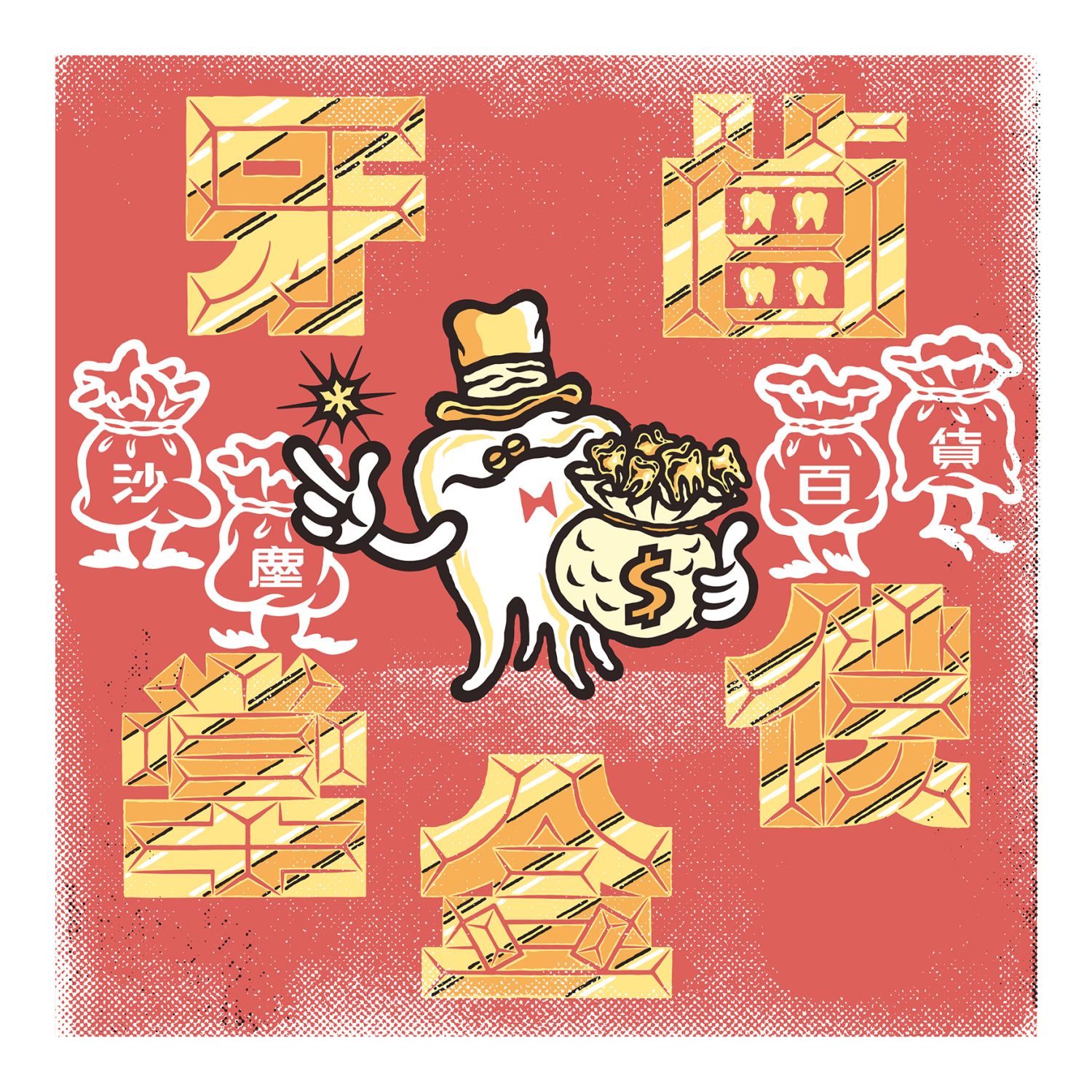
The phrase “Teeth are as good as gold” (牙齒當金使) speaks to the Cantonese idea of being trustworthy and true to one’s word. To “have teeth worth gold” means that what you say carries weight. Your word is your bond.

This expression is often used in business or money-related contexts,
where keeping one’s promises is a mark of both integrity and reliability.
That’s why, in this illustration, the little tooth takes on the look of a gentleman, complete with a bow tie and top hat, embodying the spirit of trust and respect.

TheGroxury沙塵百貨-Sip Ngaa Laa (攝牙罅)

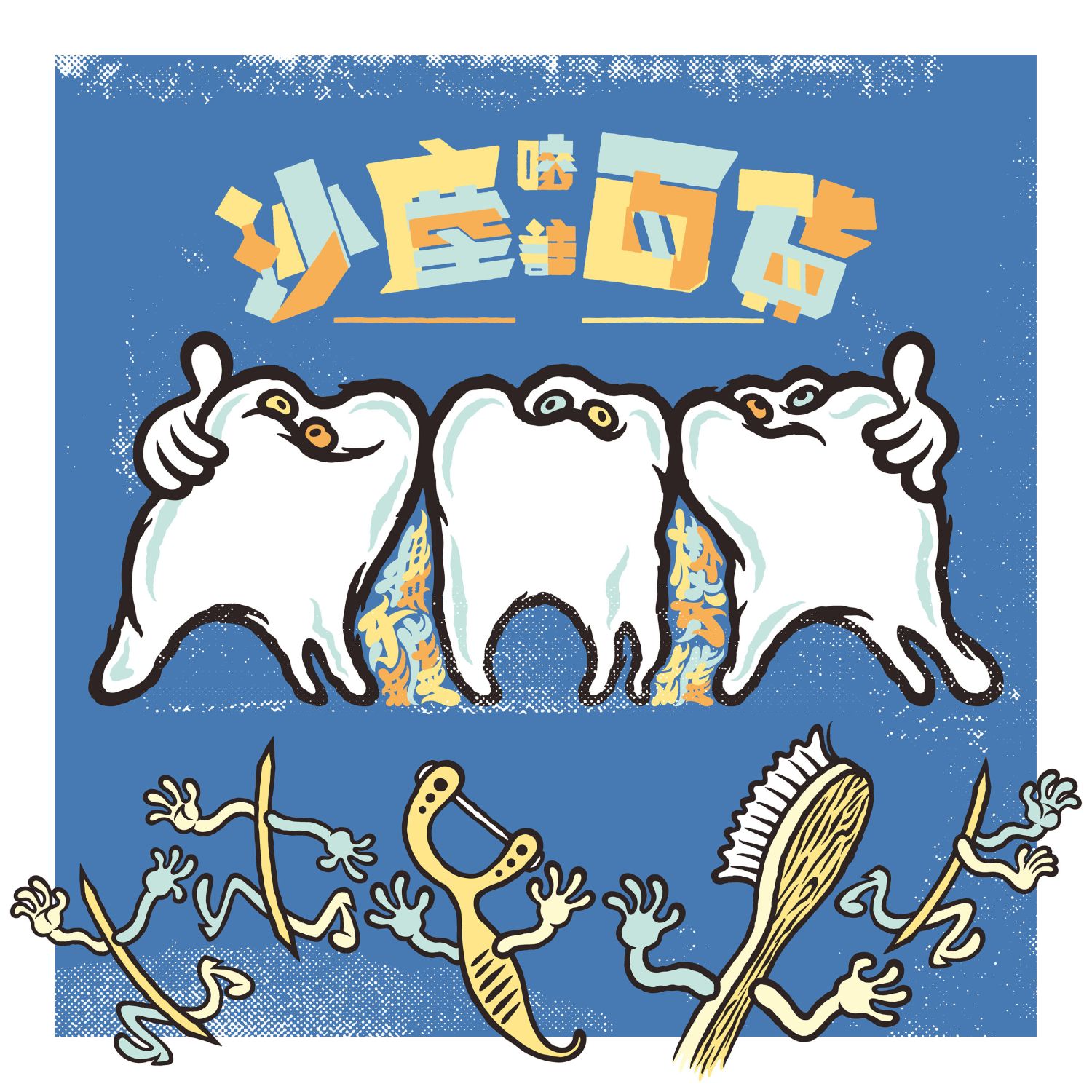
It’s odd to be inspired by something everyone finds awkward, that tiny dining mishap of food caught between your teeth.

In Cantonese, sip (攝) is a borrowed character used in many phrases: sip ngaa laa (food stuck in teeth), sip mun laa (a gap in the door), even sip taai seui (appeasing the god Tai Sui).

Such expressions, born from everyday life and shared wit, show the richness of Cantonese language.

This piece experiments with blending variant written forms and illustration, a small tribute to how language adapts, survives, and keeps inspiring me.